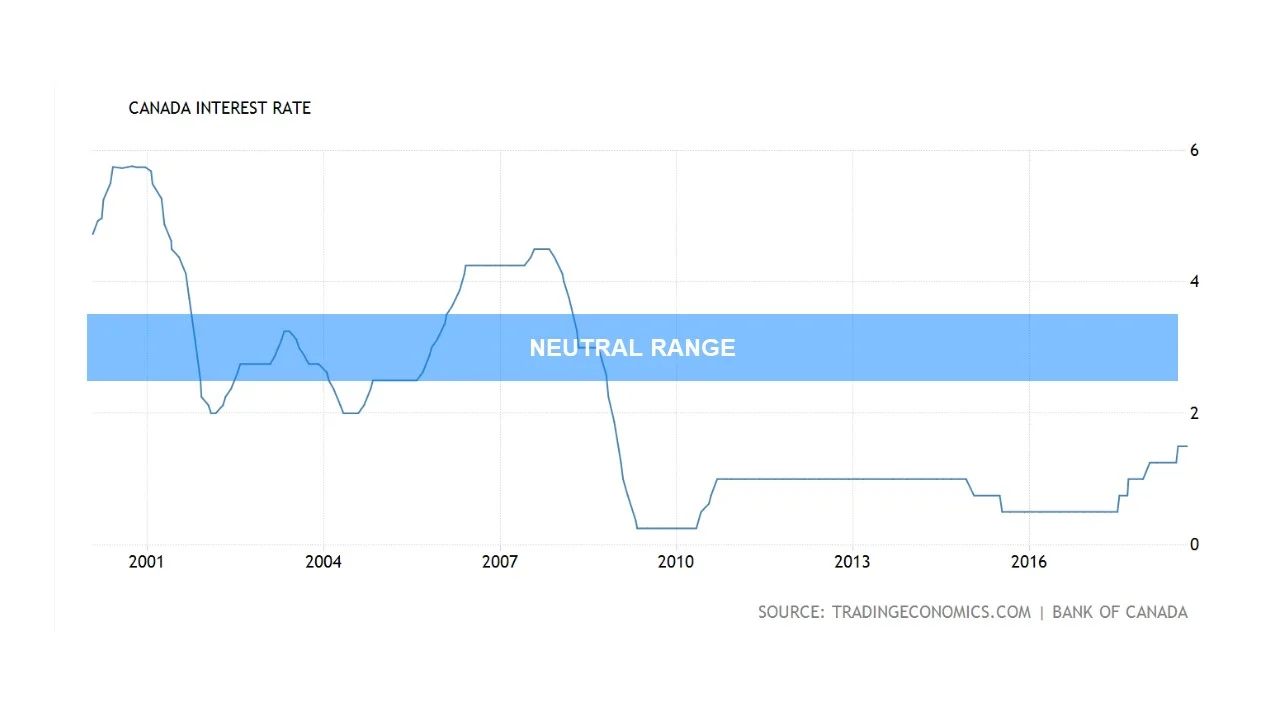
The Bank of Canada is raising rates toward a “neutral interest rate” and this will lead to higher borrowing costs, and less money in your wallet.
All in Forecast
The Bank of Canada is raising rates toward a “neutral interest rate” and this will lead to higher borrowing costs, and less money in your wallet.
It’s official. Both House and Condo apartment prices in Metro Vancouver dropped in July. RBC Economics says they now believe that the mortgage stress tests will have larger, longer-lasting dampening effect on home sales than we previously thought.
All levels of government have targeted a “soft landing” but will people lose interest in buying real estate if it only appreciates by 1-3% annually? Will the realization that the party is over lead investors to the exits?
Over the past ten years there have been many government interventions intended to cool the housing market. It appears we may have hit a tipping point. The market has stalled and is either about to provide a “soft” or a “hard” landing which will deliver much needed affordability. Alternatively, this may be a breather before prices continue their upward march.
A look at what leading economists and the Big 6 banks are predicting ahead of next Wednesday’s Bank Rate announcement.
The housing supply problem is real and could get worse.
We’ve all heard people in Vancouver who blame lack of supply for housing unaffordability. Many will have heard the opposing “Supply Myth” argument. Our analysis at Mortgage Sandbox shows that the supply problem is real and could be worse than any of us imagined.
We need to settle this once and for all, so that government can act quickly to solve our housing crisis.
The state of the market has changed a lot since our last forecast in March. Here’s an updated review of what the leading BC house price forecasts to the end of 2019.
There have been some updates to interest rate forecasts since our last review of rates in March. The overall trend is upward but there are differing opinions on how high rates will rise.
The Bank of Canada just kept the overnight rate at 1.25% but leading economists expect hikes throughout the course of the year. Why is this the case and why does it matter?