
Metro Edmonton Real Estate Forecast: Market Shifts Toward Buyers as Inventory Expands
HIGHLIGHTS
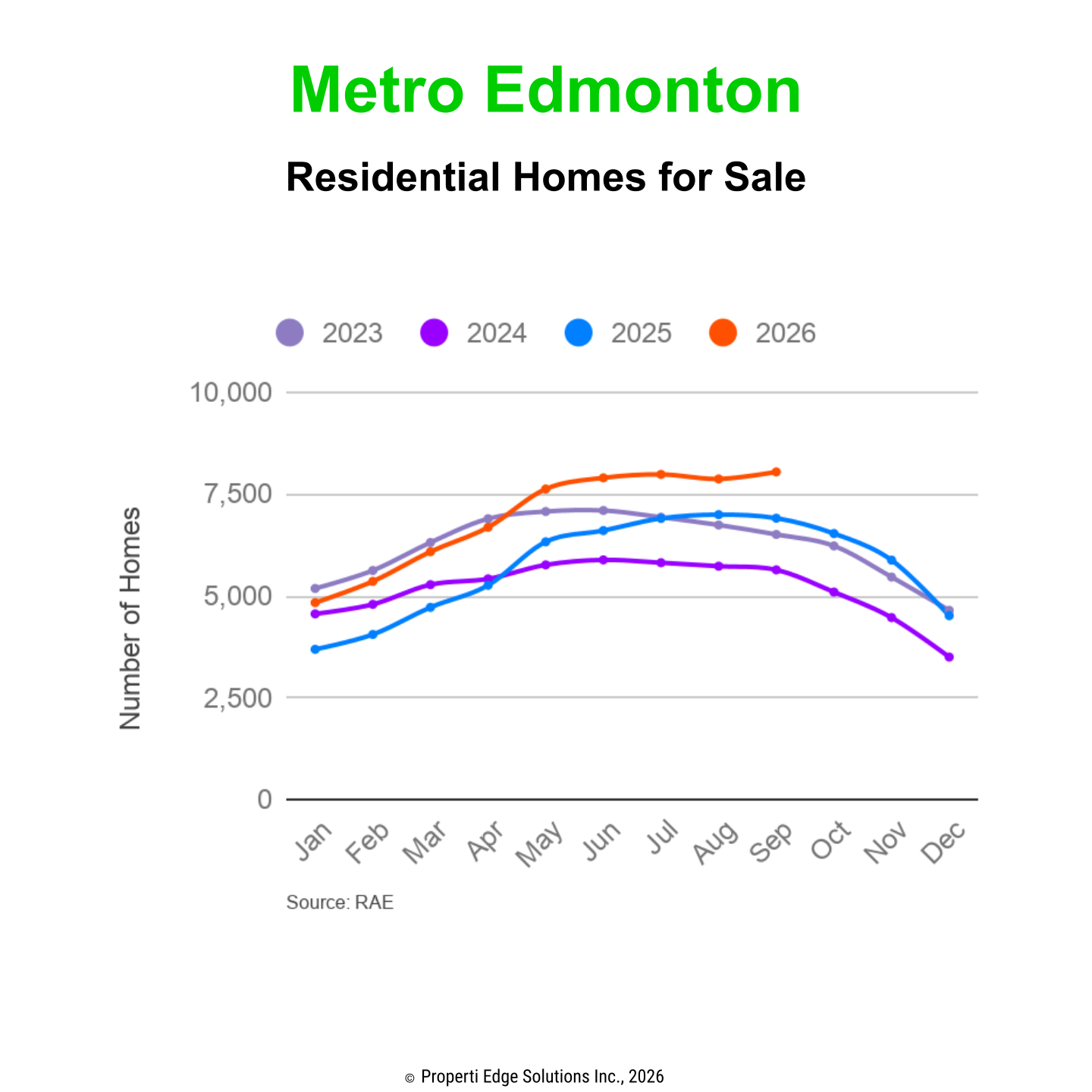
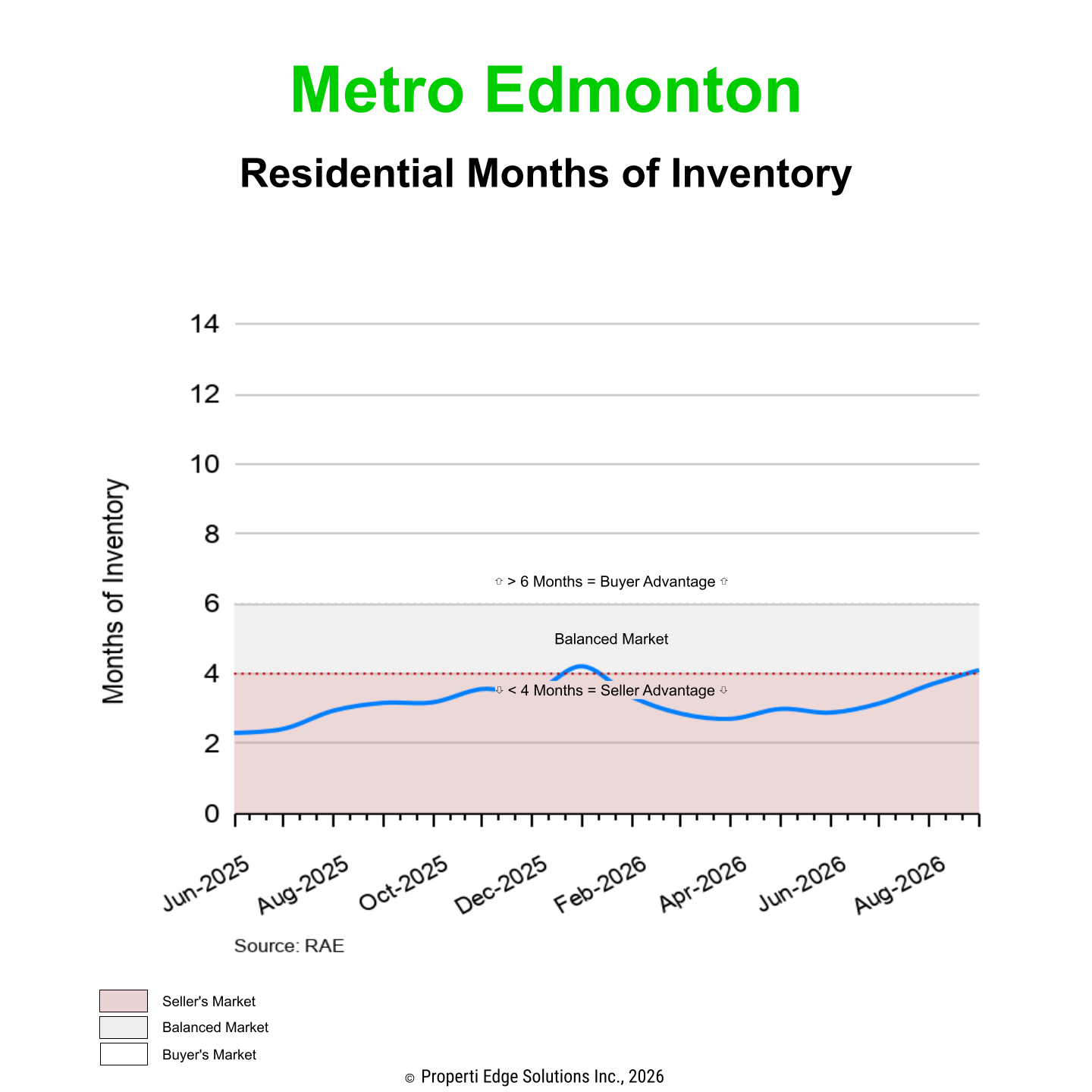
Balanced Conditions Settling In: Overall inventory across Metro Edmonton increased 28 percent year over year, rising from 3.2 to 4.1 months of inventory and giving prospective buyers more negotiating room.
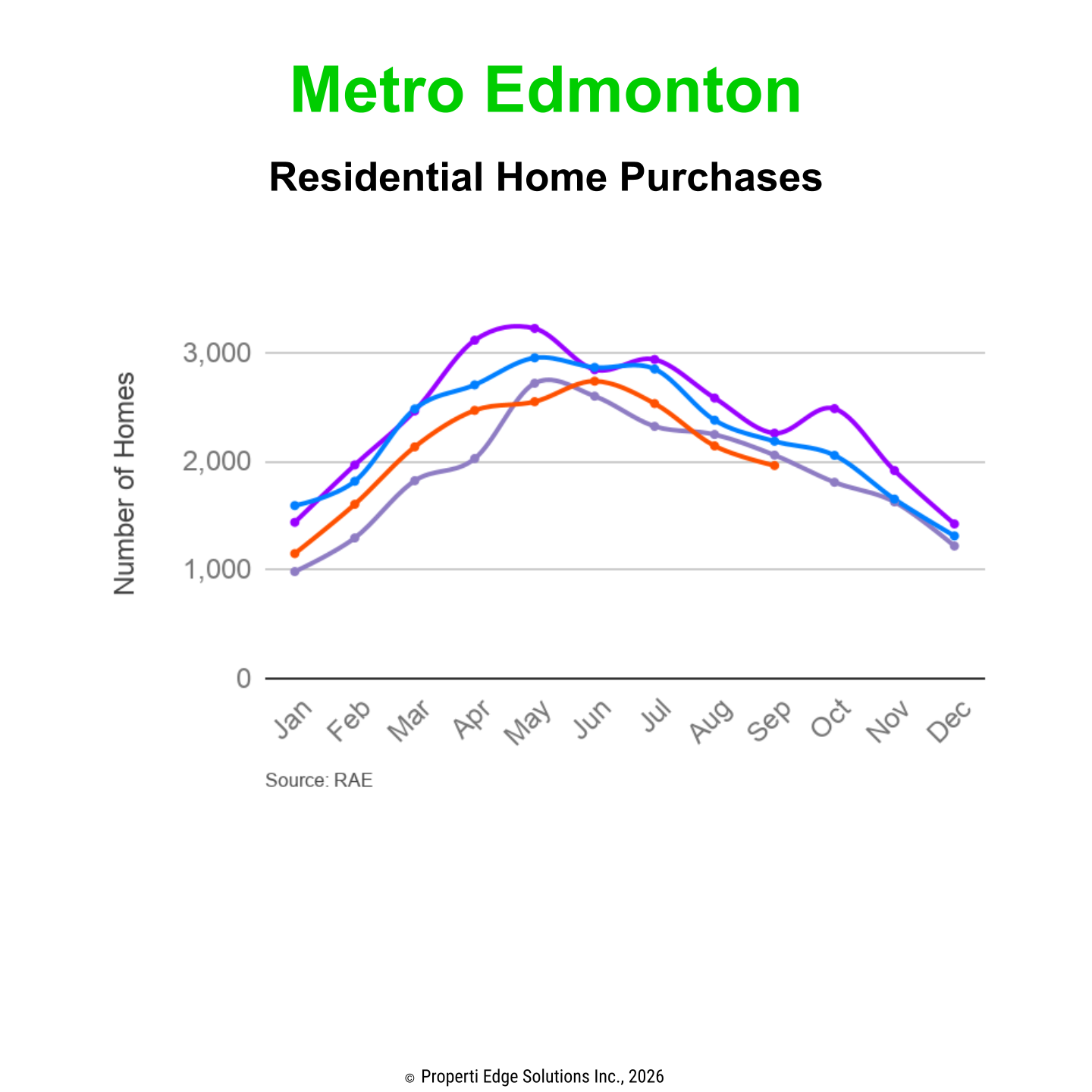
Widespread Sales Cooling: Purchase demand declined across all housing categories, led by a sharp 26 percent drop in condo apartment sales and modest pullbacks in detached homes (down 7 percent) and townhouses (down 9 percent).
Price Softening Over the Quarter: Benchmark values across detached homes, townhouses, and condo apartments all slipped 2 percent over the past three months.
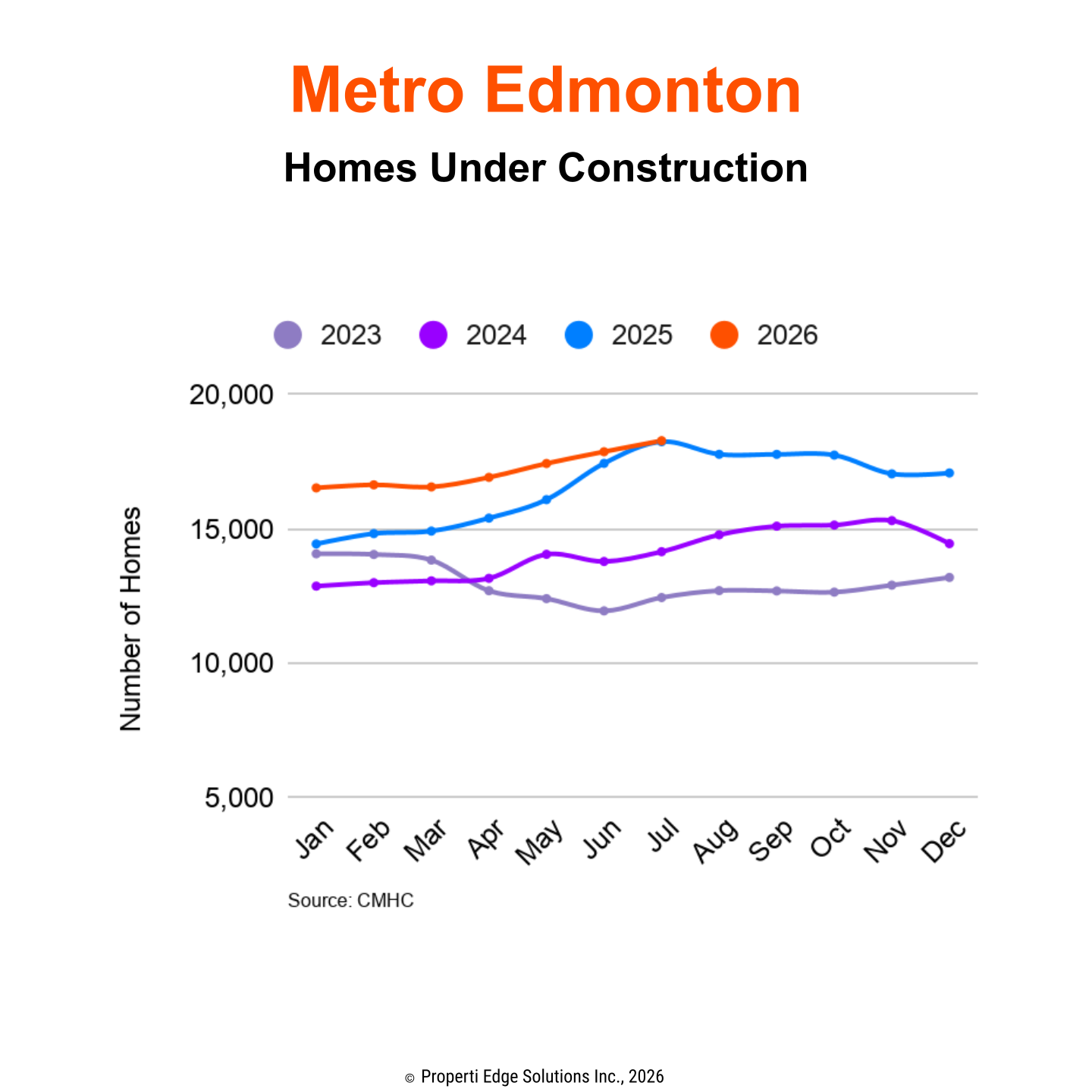
Multi-Family Supply Expansion: Higher-than-normal construction volumes in the condo segment are expected to create absorption challenges, likely prompting developers to offer buyer incentives or price concessions.
Metro Edmonton Housing Market Snapshot
The Metro Edmonton real estate market is transitioning into balanced territory. While sellers previously held a clearer advantage, rising supply levels and cooling purchase demand are restoring equilibrium across the region.
Overall active inventory increased by 28 percent year over year, pushing months of inventory from 3.2 up to 4.1 months. This shift offers buyers more choice and leverage during contract negotiations.
Detached Houses: Moderate Price Adjustments Amid Steady Demand
The single-detached sector continues to show reasonable stability compared to multi-family segments, supported by solid local affordability metrics.
Purchases & Demand: Purchase demand slipped 7 percent compared to last year.
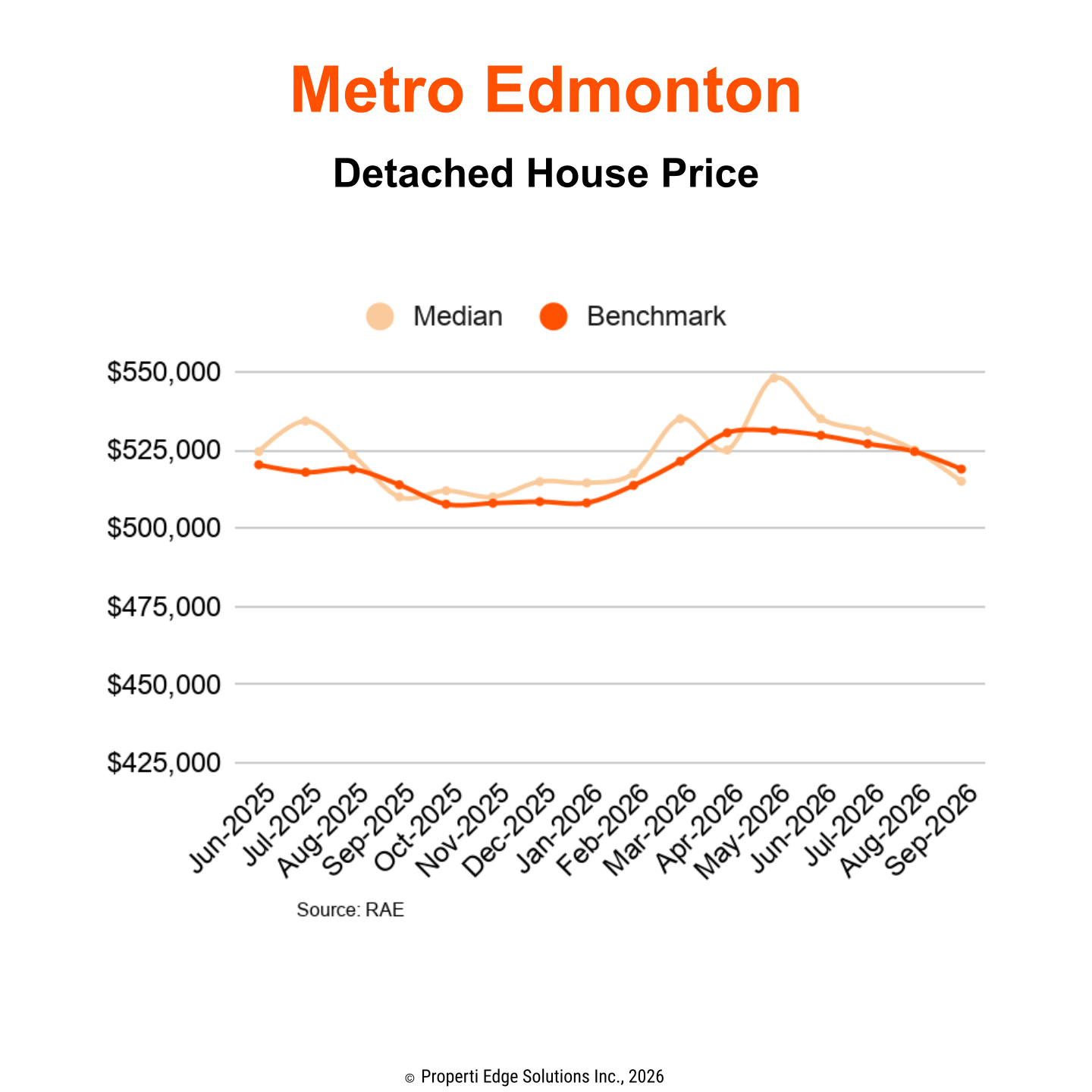
Price Movements: The benchmark single-detached home price stands at $518,900, down 2 percent over the last three months, though still up 1 percent year over year. The median price dropped 4 percent over the past quarter to $515,000.
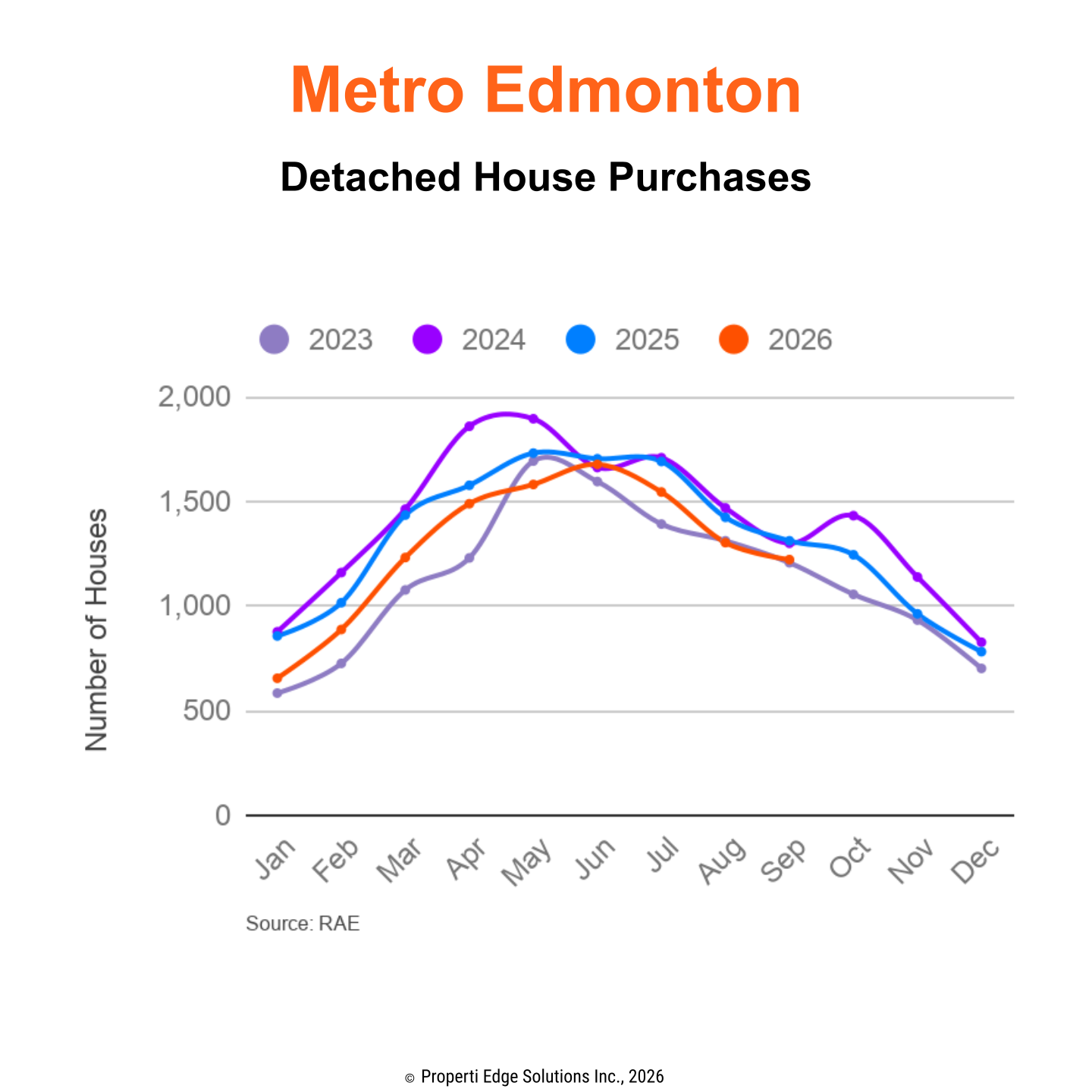
Detached House Purchases Comparison
At 5.4 times the local median household income, single-detached homes in Edmonton remain aligned with the sustainable affordability benchmark of 4.0 to 6.0 times income.
Townhowses: Softening Benchmark Values
Townhouse activity pulled back modestly over recent months while pricing showed minor short-term softening.
Purchases & Demand: Demand dropped 9 percent year over year.
Price Movements: The benchmark townhouse price sits at $269,500, reflecting a 2 percent drop over the last quarter and a 5 percent decline compared to last year. The median price held steady over the last three months at $295,000.
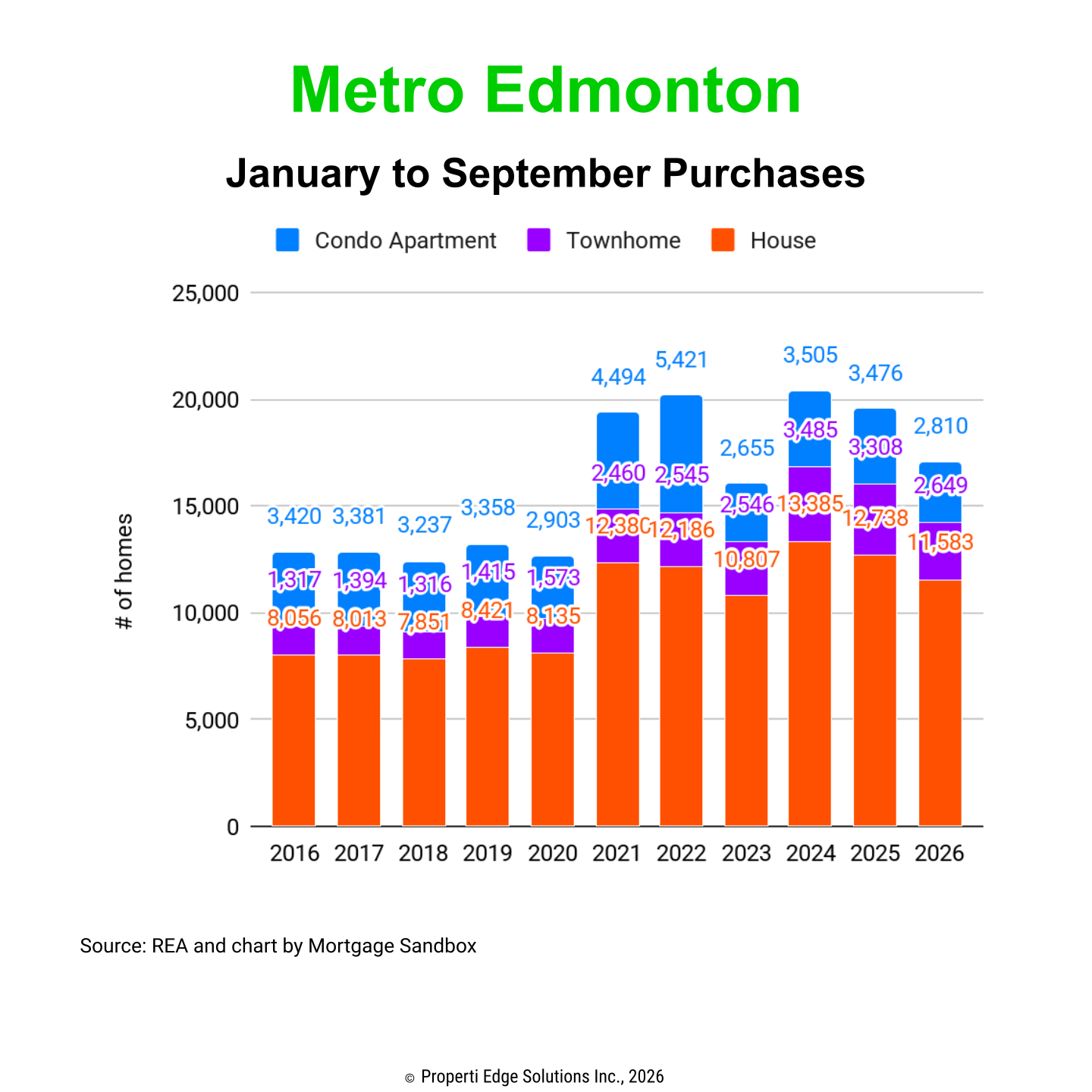
January to September Home Purchases Breakdown
Condo Apartments: Rising Supply Puts Pressure on Prices
The condo apartment sector faces the strongest headwinds in Metro Edmonton due to reduced sales activity and ongoing multi-family construction projects.
Purchases & Demand: Buyer activity saw a noticeable pullback, with demand dropping 26 percent.
Price Movements: The benchmark condo price sits at $197,400, down 2 percent over three months and down 1 percent year over year. The median price fell 6 percent over the last quarter to $184,500.
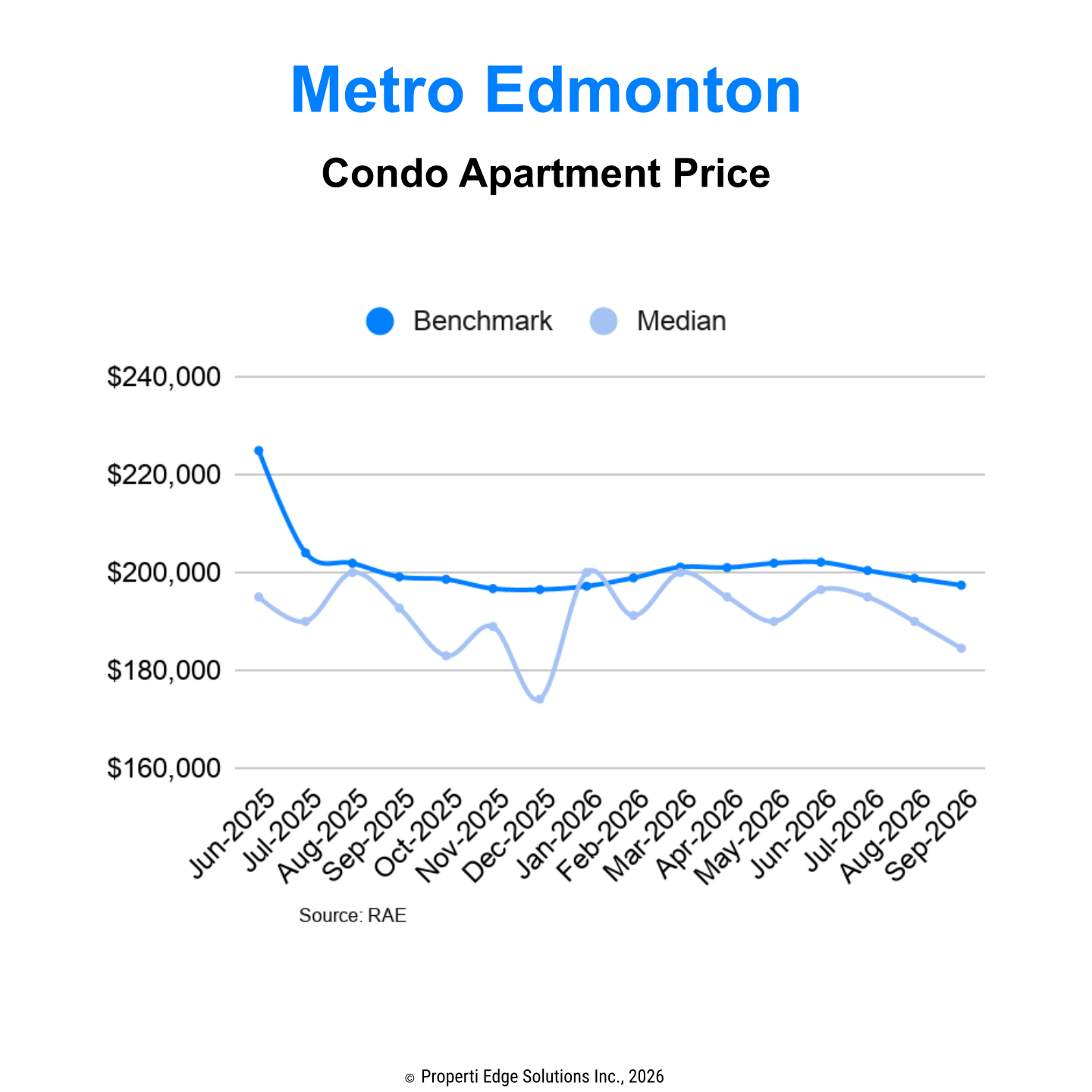
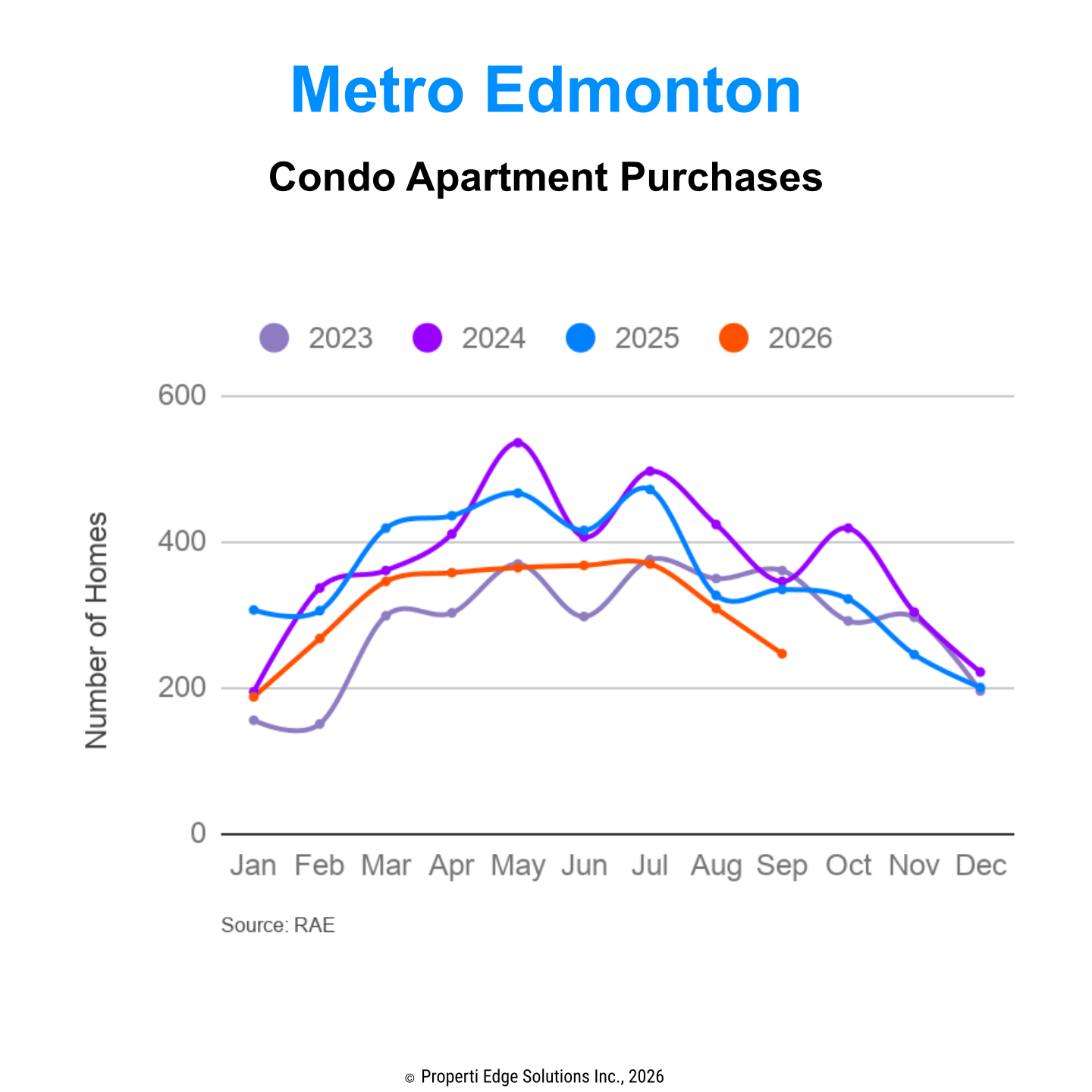
While the benchmark price is highly affordable at 2.1 times median household income, higher-than-normal construction levels present potential absorption challenges. Developers may need to introduce incentives or pricing flexibility to clear new inventory.
Macro Trends & Strategic Takeaways
The Bank of Canada policy rate remains low following recent rate decisions. Lower interest rates continue to bolster underlying buyer purchasing power, but interest rate adjustments can take up to 18 months to fully filter through to market activity.
However, inflation worries could lead to a rate increase in coming months.
For Buyers:
The rise to 4.1 months of inventory provides room to negotiate terms and conditions. Buyers exploring the condo sector have the strongest leverage, as new completions add to active listing choices.
For Sellers:
Sellers should anticipate longer marketing periods than during peak seller market cycles. Accurate pricing based on recent quarterly trends is critical, particularly in the apartment and townhouse sectors where supply has expanded.