Vancouver Buyers Lose Ground as Inventory Drops and Townhouses Reach Equilibrium | July 2026
Mid-Year Summary: At the half-year mark of 2026, Metro Vancouver’s real estate landscape is shifting away from uniform buyer dominance. While detached homes and condo apartments remain technically within buyer's market territory, inventory levels across all three segments have fallen sharply, pulling leverage back toward sellers. Townhouses have officially crossed into a Balanced Market, driven by a 23% plunge in active listings. Price declines have largely plateaued for single-family homes and townhouses, leaving condos as the sole segment experiencing ongoing price adjustments.
The Market at a Glance
Six months into 2026, Metro Vancouver's housing segments are decoupling from the widespread buyer's market conditions seen earlier in the year. Supply has contracted faster than demand across nearly every category:
Detached Homes: Remain a buyer's market, but inventory dropped 16% as buyer demand surged by 14%.
Condo Apartments: Remain soft, but inventory fell 14% as listings contracted faster than demand grew.
Townhouses: Have shifted into a Balanced Market as active listings plummeted by 23%.
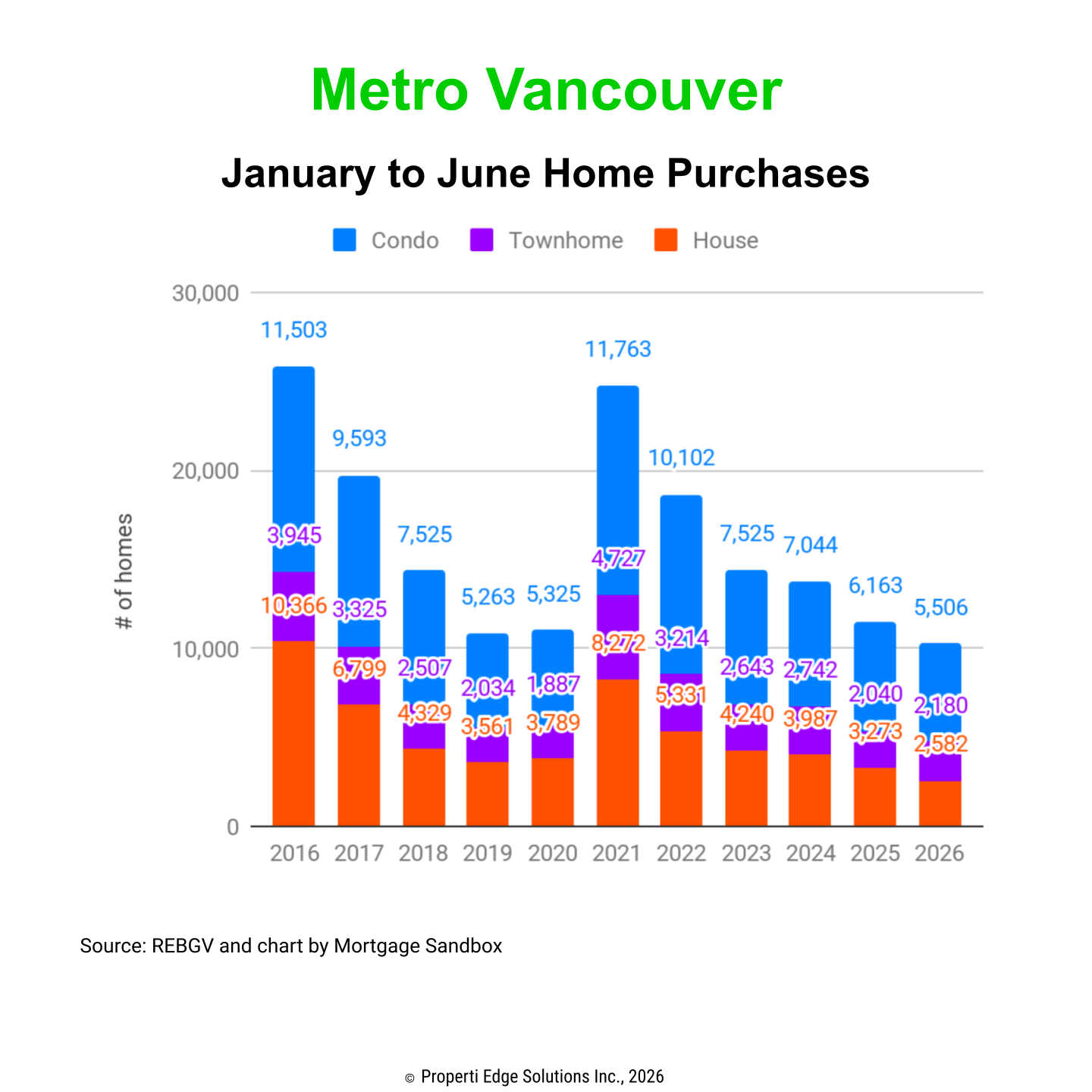
Key Market Metrics Breakdown (Half-Year Comparison)
| Segment | Market Status | Months of Inventory | Benchmark Price | YoY Price Trend |
|---|---|---|---|---|
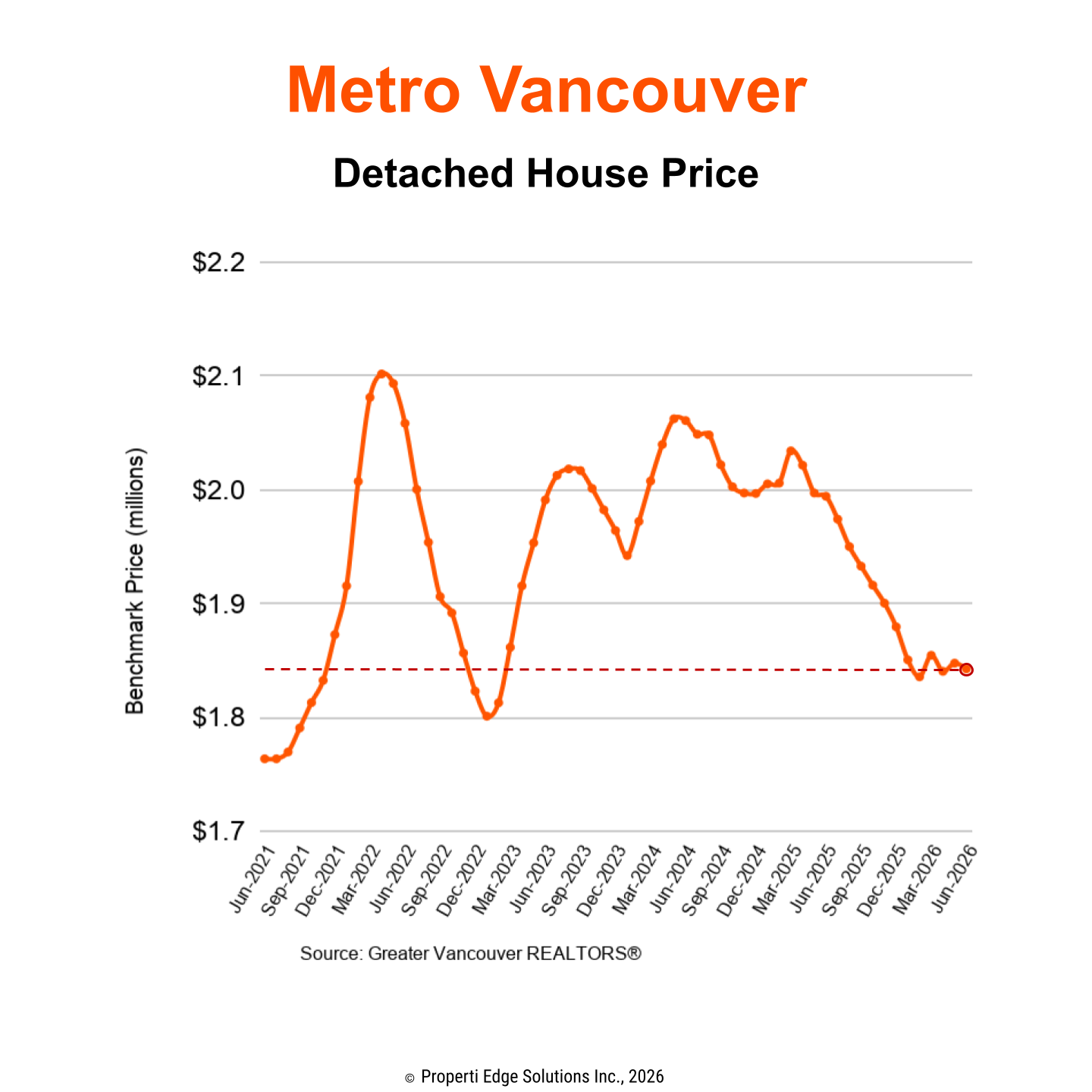
| Detached Houses | Buyer's Market Trending to Seller | 8.5 Mo. Down 16% from 10.1 | $1,842,900 | -8% from $1,994,500 |
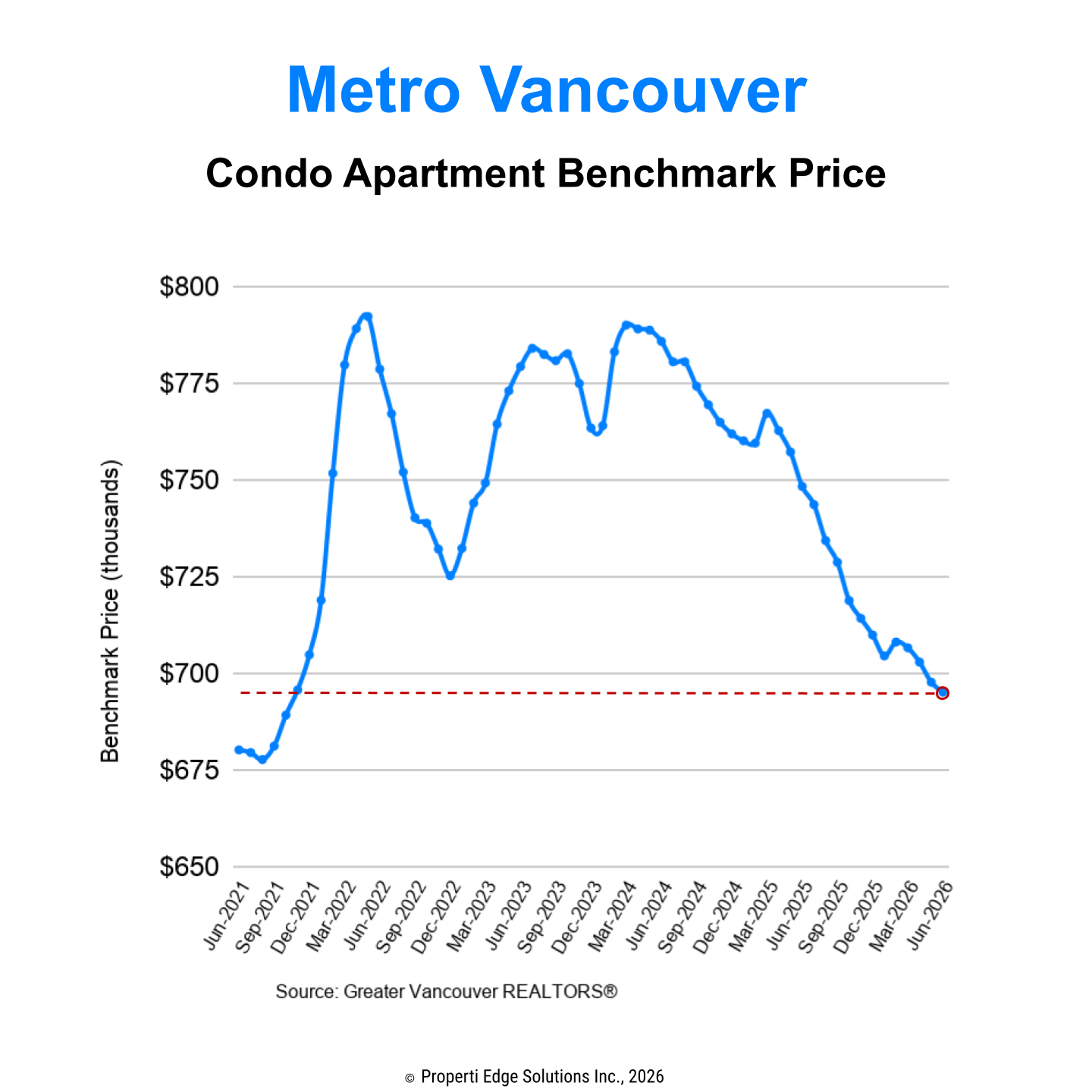
| Condo Apartments | Buyer's Market Trending to Seller | 6.2 Mo. Down 14% from 7.2 | $695,200 | -7% from $748,400 |
| Townhouses | Balanced Market | 5.5 Mo. Down 23% from 7.1 | $1,046,200 | -5% from $1,103,900 |
Detailed Segment Breakdown
Detached Houses: Demand Surges as Buyers Feeling Pressure
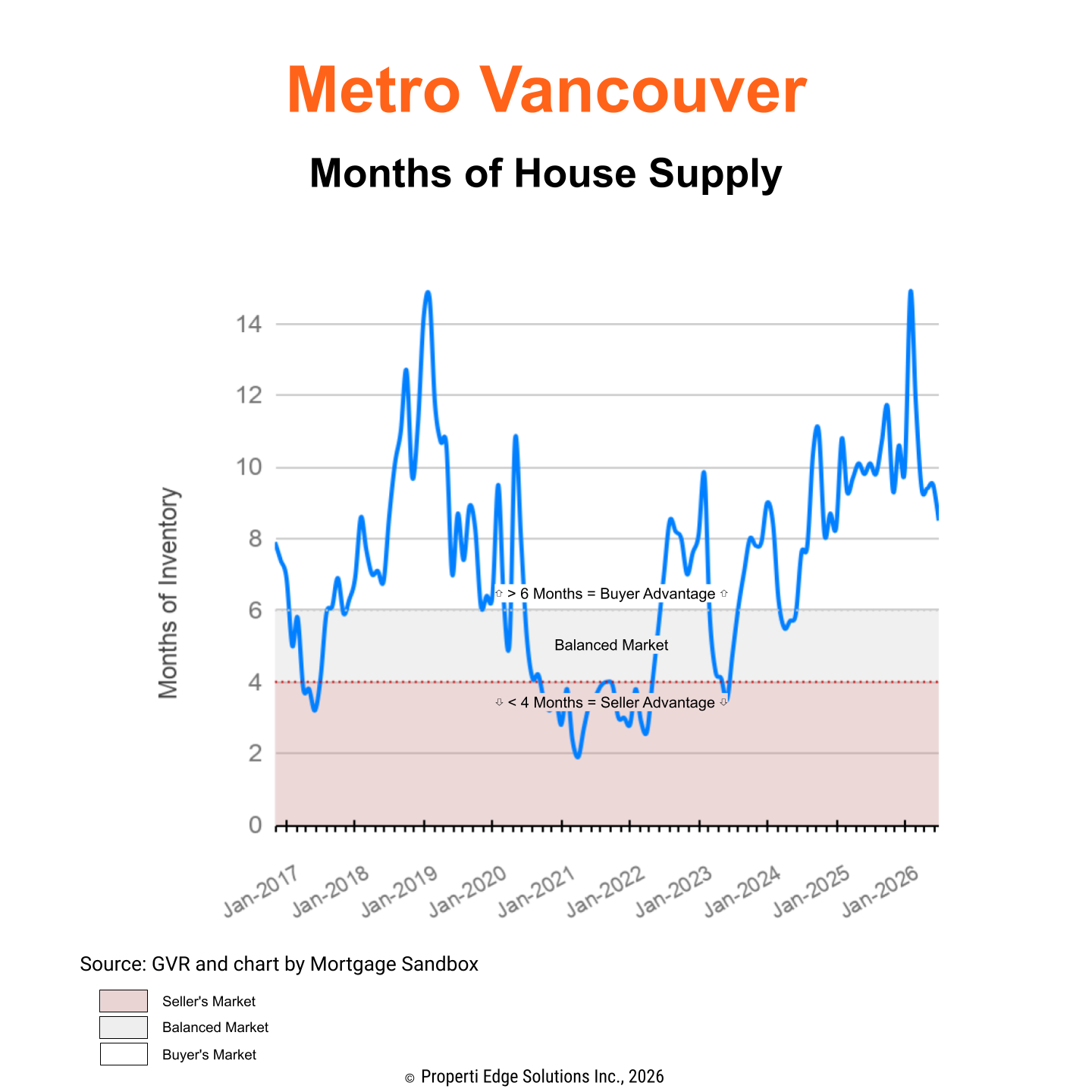
Detached homes technically favor buyers with 8.5 months of inventory, but negotiating power is eroding. A year ago, supply stood at 10.1 months. The driving factor is a strong 14% rebound in purchase demand, coupled with a 5% decline in active listings.
Price Dynamics: The benchmark detached home price stands at $1,842,900, down 8% annually from $1,994,500. However, over the past three months, benchmark prices dropped by just 1%, showing clear signs that the annual price slide is coming to a bottom.
Condo Apartments: Shrinking Supply, Persistent Price Slippage
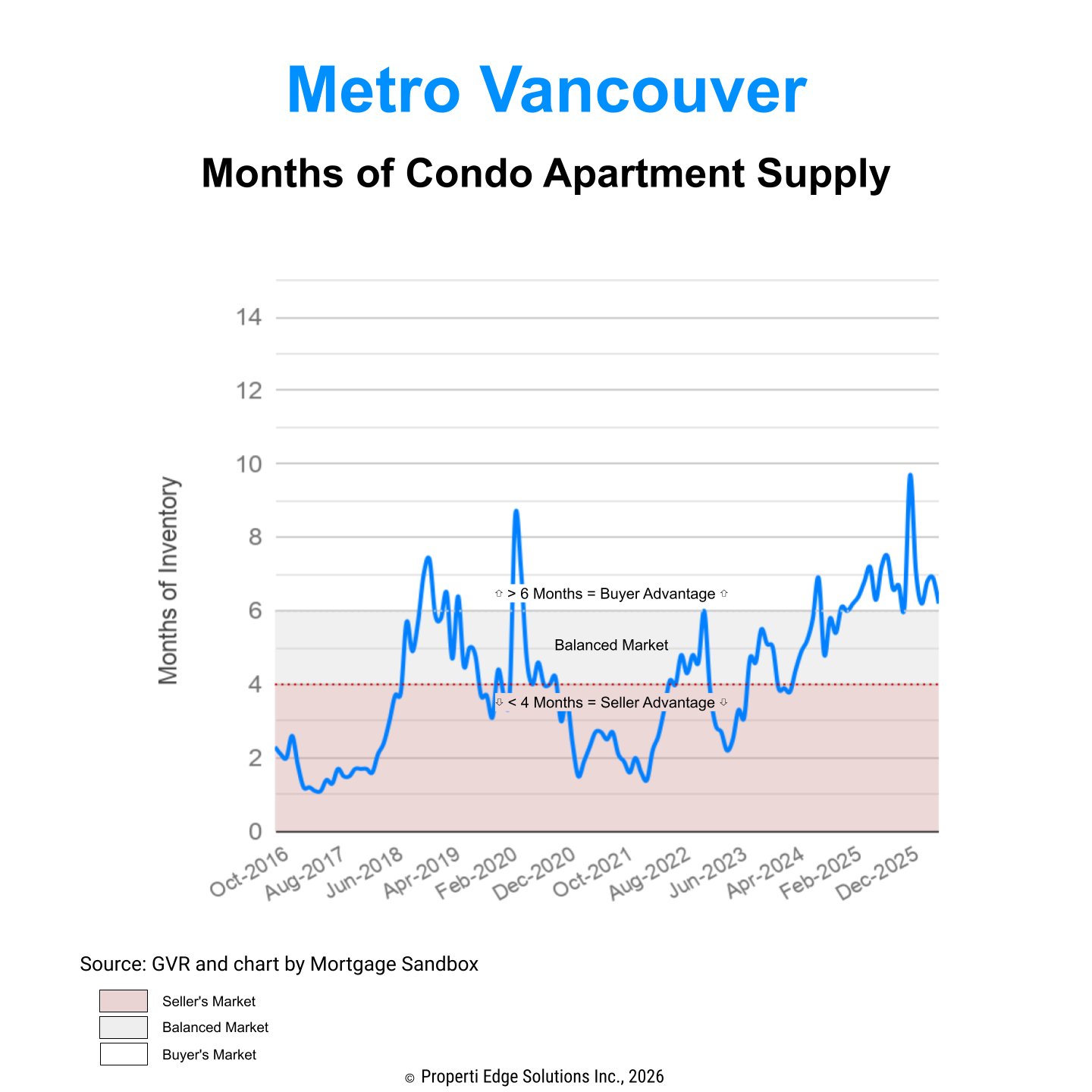
The condo market remains the softest segment in Metro Vancouver. Months of supply dropped from 7.2 to 6.2 months (-14% year-over-year), hovering just above the 6-month threshold that defines a buyer's market. Buyer demand grew 6%, while active listings dropped 7%.
Price Dynamics: Despite the inventory contraction, condo prices continue to slide. The benchmark condo price fell to $695,200—down 7% annually (from $748,400) and down an additional 2% over the last quarter.
Townhouses: Official Transition to a Balanced Market
Townhouses are no longer a buyer's market. Months of inventory plunged 23% year-over-year from 7.1 to 5.5 months, placing townhouses firmly within Balanced Market territory (4 to 6 months).
Supply-Driven Tightening: This shift was driven entirely by sellers stepping back: active listings crashed by 23%, while buyer demand remained essentially flat (-1%).
Price Dynamics: The benchmark townhouse price is $1,046,200, down 5% year-over-year (from $1,103,900), but has remained 100% flat over the past three months, establishing a solid floor.
Macroeconomic & Fundamental Risk Analysis
Macro Environment & Interest Rate Cycle:
Metro Vancouver's deep buyer pool ensures market liquidity even during slow periods.
Central bank rates remain lower and on pause. While low borrowing costs expand buyer budgets, potential future rate increases (if inflation returns) could take up to 18 months to fully impact housing demand and prices.
Valuation Multiples & Structural Risk:
Detached Houses (Bubble Risk): Detached homes trade at 20.5 times median household income—massively disconnected from the 4–6x historical benchmark for sustainability.
Condo Apartments (Overvaluation): Condos trade at 7.7 times median income, a level prone to moderate price volatility and ongoing valuation adjustments.
New Construction Absorption:
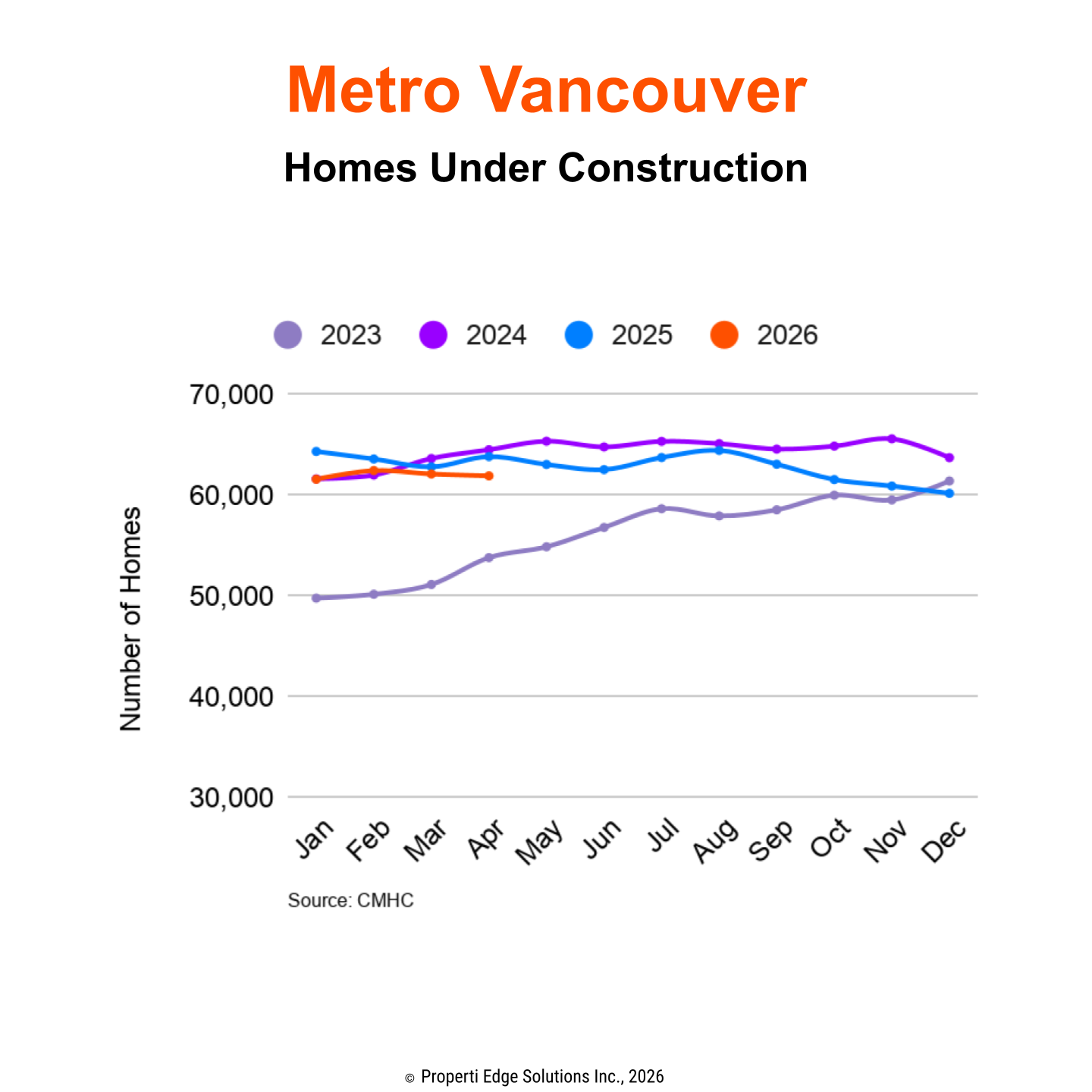
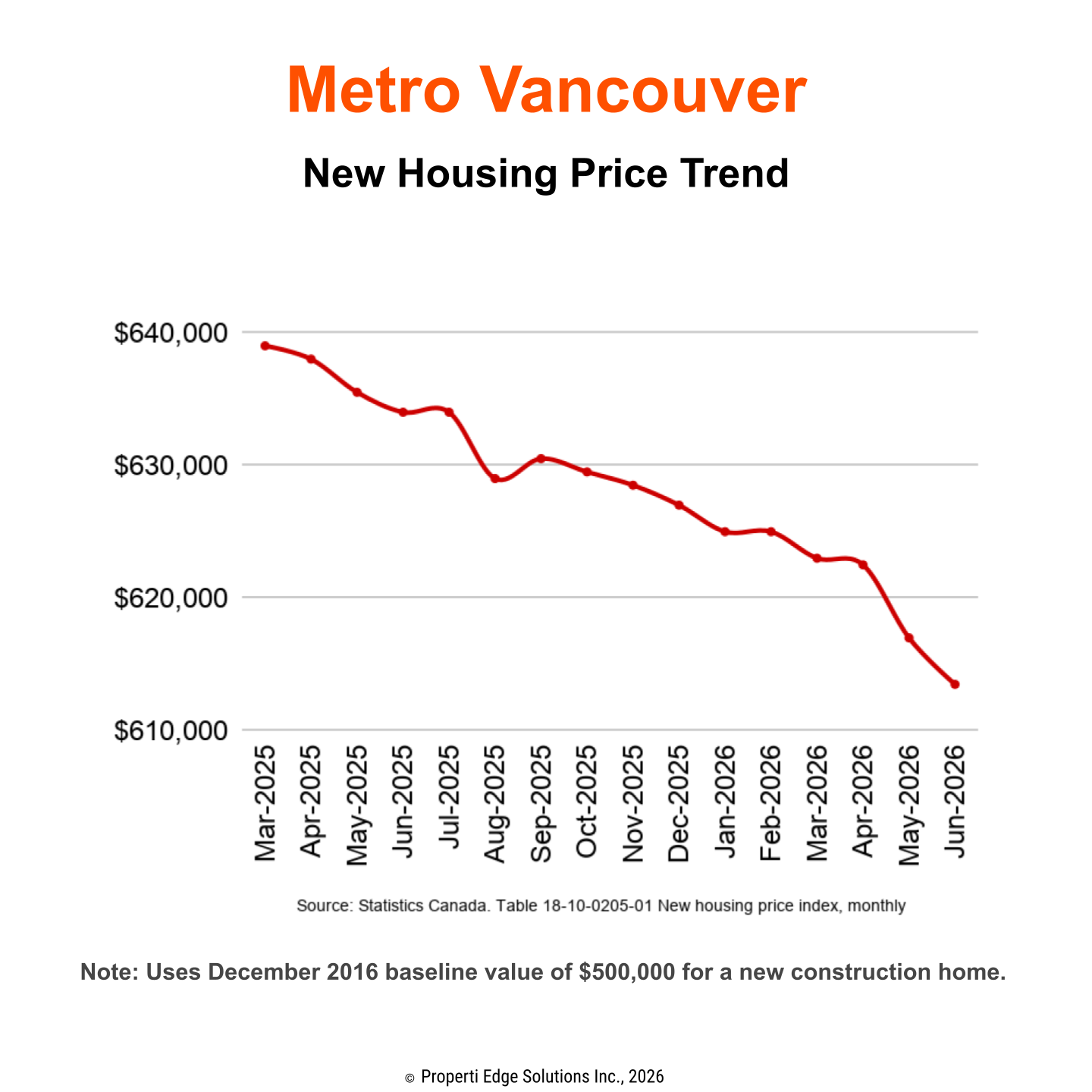
Construction levels across Metro Vancouver remain at typical multi-year averages (~60,000–63,000 homes under construction). Completed units are expected to be absorbed by standard population growth without putting downward pressure on prices.
Summary & Second-Half Outlook
The first half of 2026 concludes with a clear message: Vancouver’s market correction is losing momentum, and buyer leverage is shrinking. While detached homes and condos remain in buyer's territory on paper, falling active listings across all property types—and a transition to balance in townhouses—mean buyers who wait for deeper discounts may find fewer options and stiffer competition in H2 2026.