Buying Vancouver Real Estate: Is Now the Time, or Should You Wait Until January?
A data-driven look at why autumn buyers hold the upper hand, and how market seasonality could unlock even deeper value by winter.
With prices drifting downward and inventory hovering at elevated levels, prospective home buyers across Metro Vancouver are asking a critical question: Should I step in now, or hold off? The short answer is yes: now is a solid time to buy because Metro Vancouver is firmly locked in a buyer's market. However, patience could yield even greater rewards. As we enter the second half of the year (a period historically defined by seasonal cooling), price declines are poised to accelerate faster between now and Christmas than during the spring. For strategic buyers, today offers exceptional leverage, but January 2027 could bring the sweetest deals of the cycle.
Metro Vancouver Key Market Metrics Summary
| Segment | Market Status | Months of Supply | Benchmark Price | YoY Price Trend |
|---|---|---|---|---|
| Detached Houses | Buyer's Market Trending to Seller | 10.5 Mo. Down 2% from 10.7 | $1,799,400 | -8% from $1,950,300 |
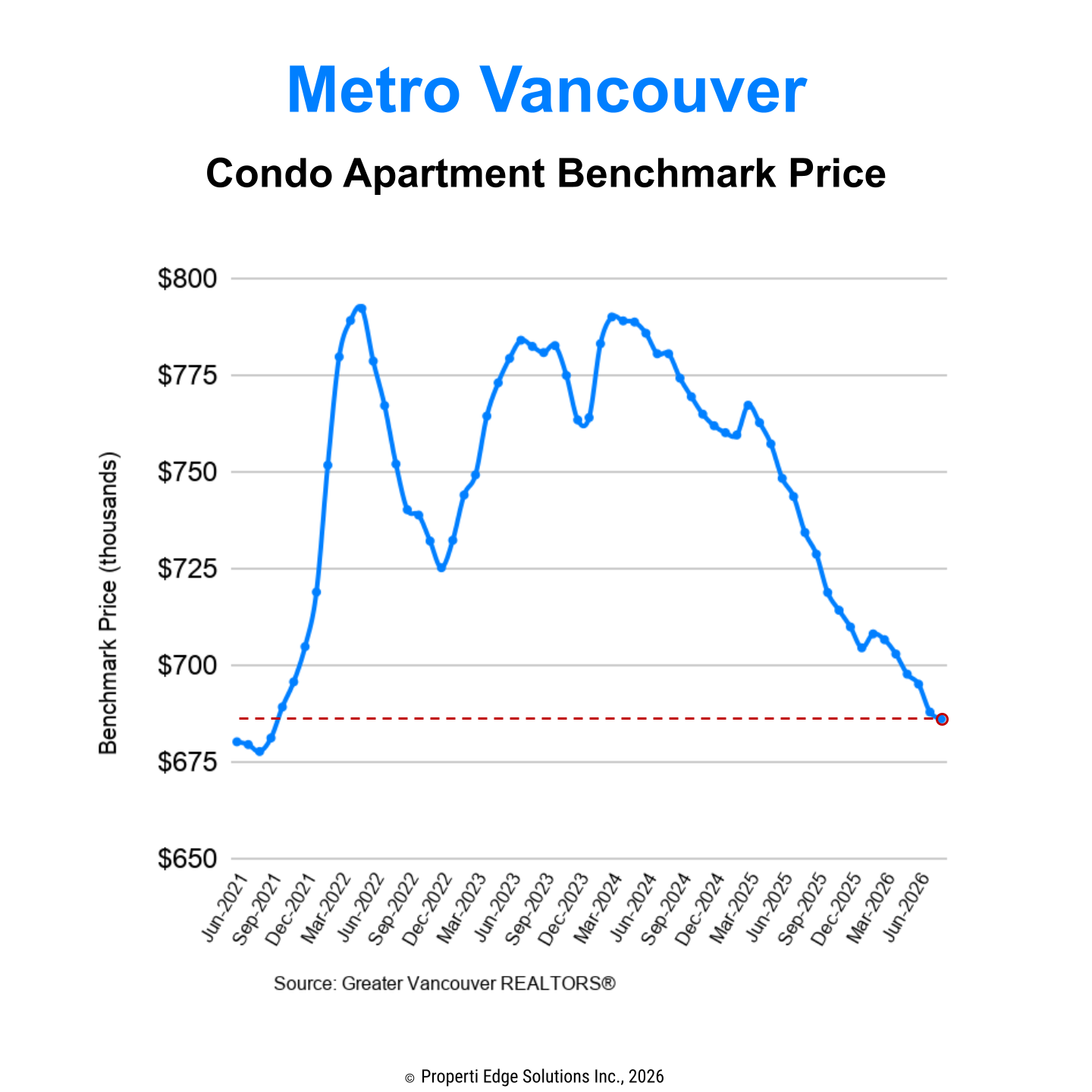
| Condo Apartments | Buyer's Market Trending to Seller | 7.3 Mo. Up 1% from 7.2 | $686,200 | -7% from $734,400 |
| Townhouses | Buyer's Market Trending to Seller | 6.6 Mo. Down 21% from 8.4 | $1,028,800 | -5% from $1,079,600 |
Metro Vancouver Detached House Market Conditions
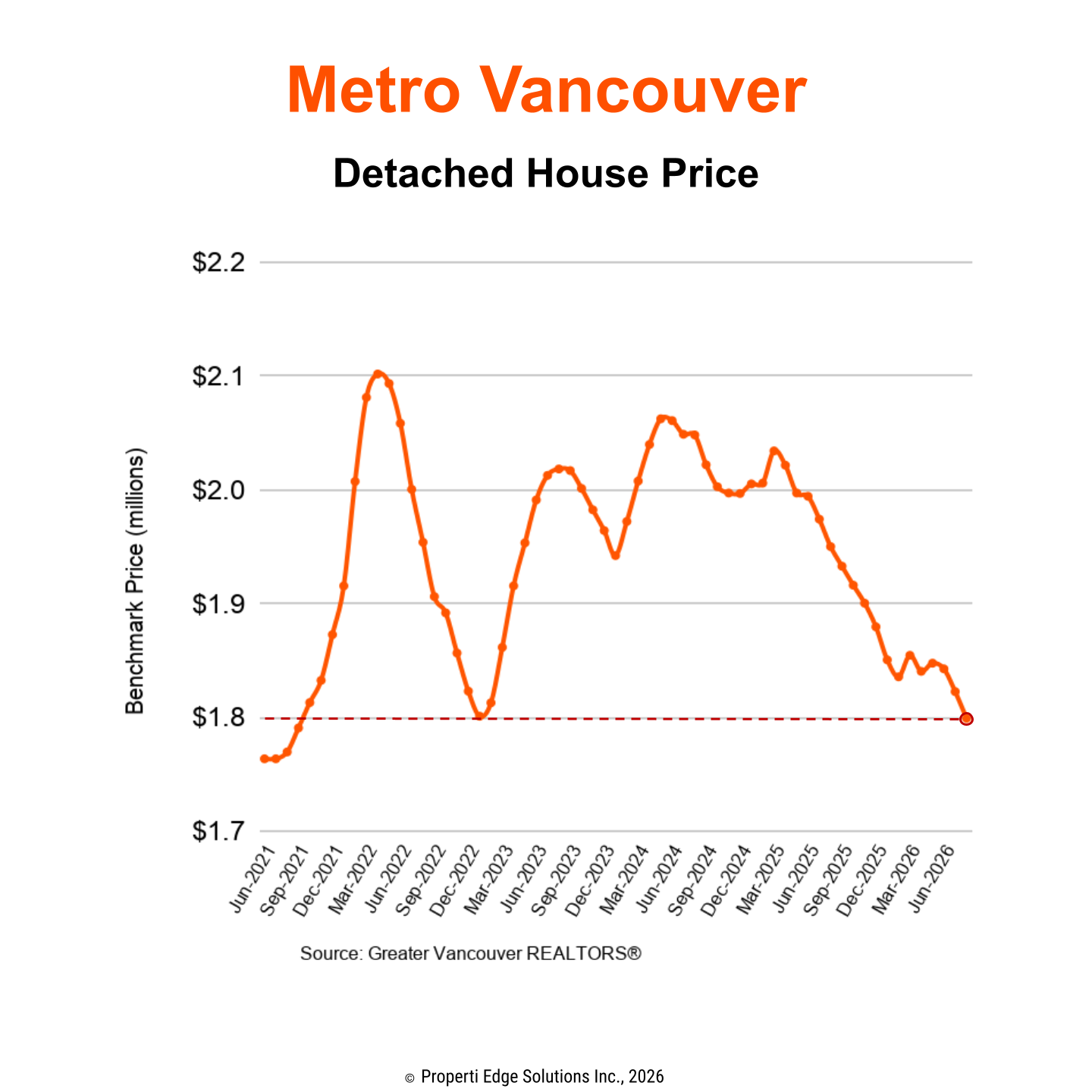
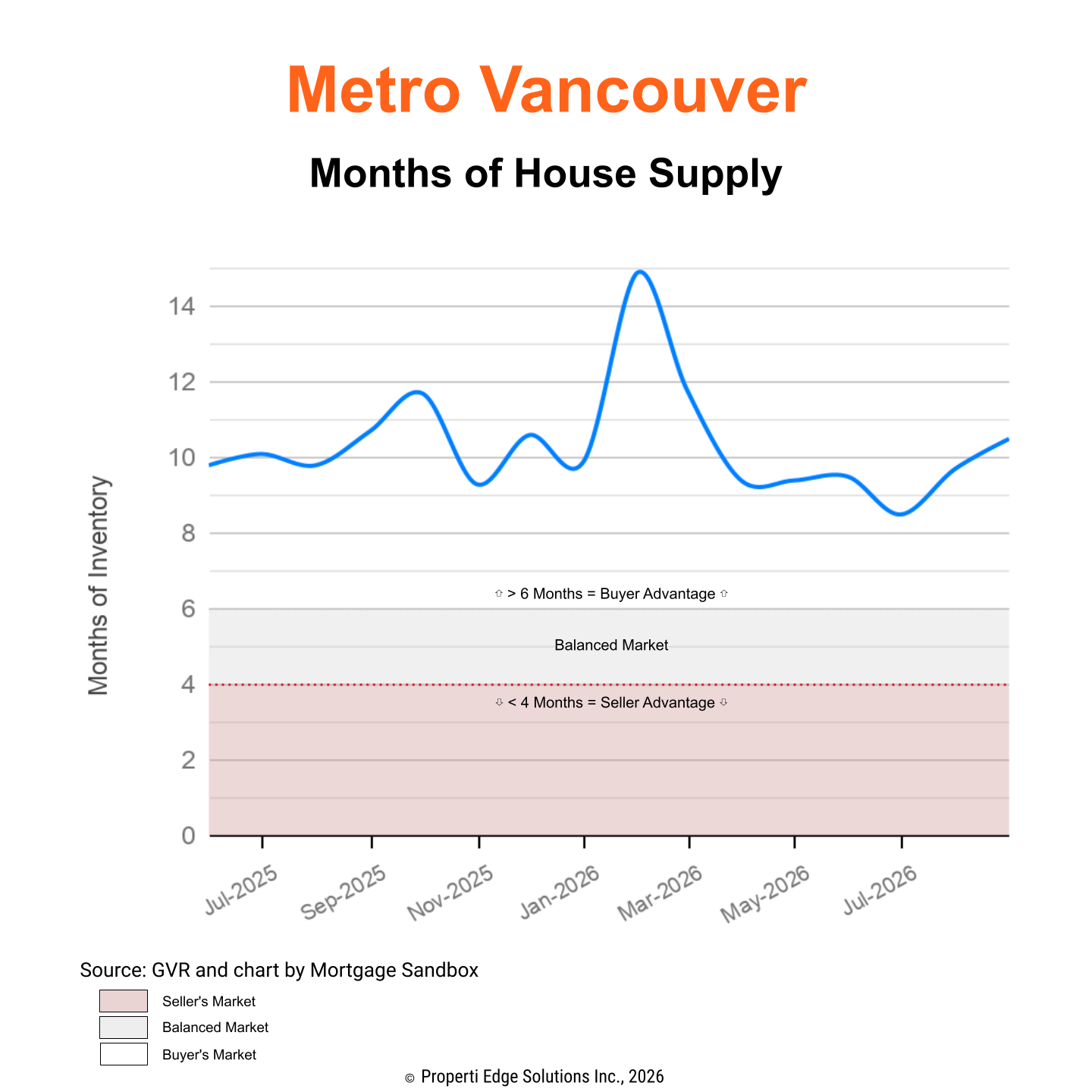
The detached house segment continues to favour buyers, offering substantial room for price negotiation. While active inventory levels remain virtually unchanged from last year (10.5 months of inventory today versus 10.7 months last year), reduced purchase demand keeps buyers in the driver's seat.
Demand & Supply: Purchase demand has dropped 3 per cent, while the active supply of listings decreased by 5 per cent.
Price Movement: The benchmark detached home price sits at $1,799,400, reflecting a 3 per cent decline over the past three months and an 8 per cent drop year-over-year (down from $1,950,300).
Metro Vancouver Condo Apartment Market Conditions
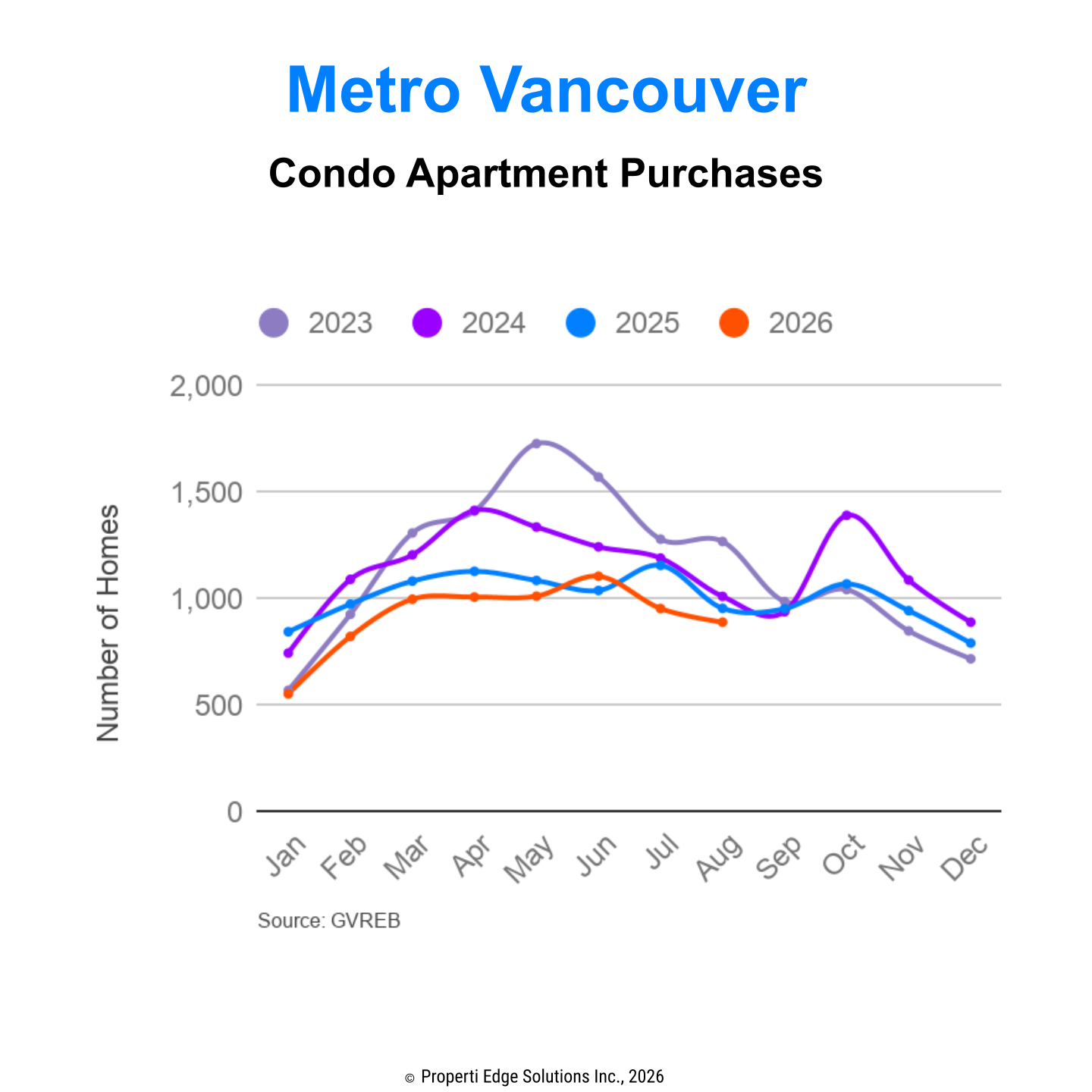
The condo market exhibits similar buyer-friendly conditions, defined by ample selection and softening benchmark prices. Supply conditions remain steady compared to last year, with months of inventory shifting slightly to 7.3 from 7.2.
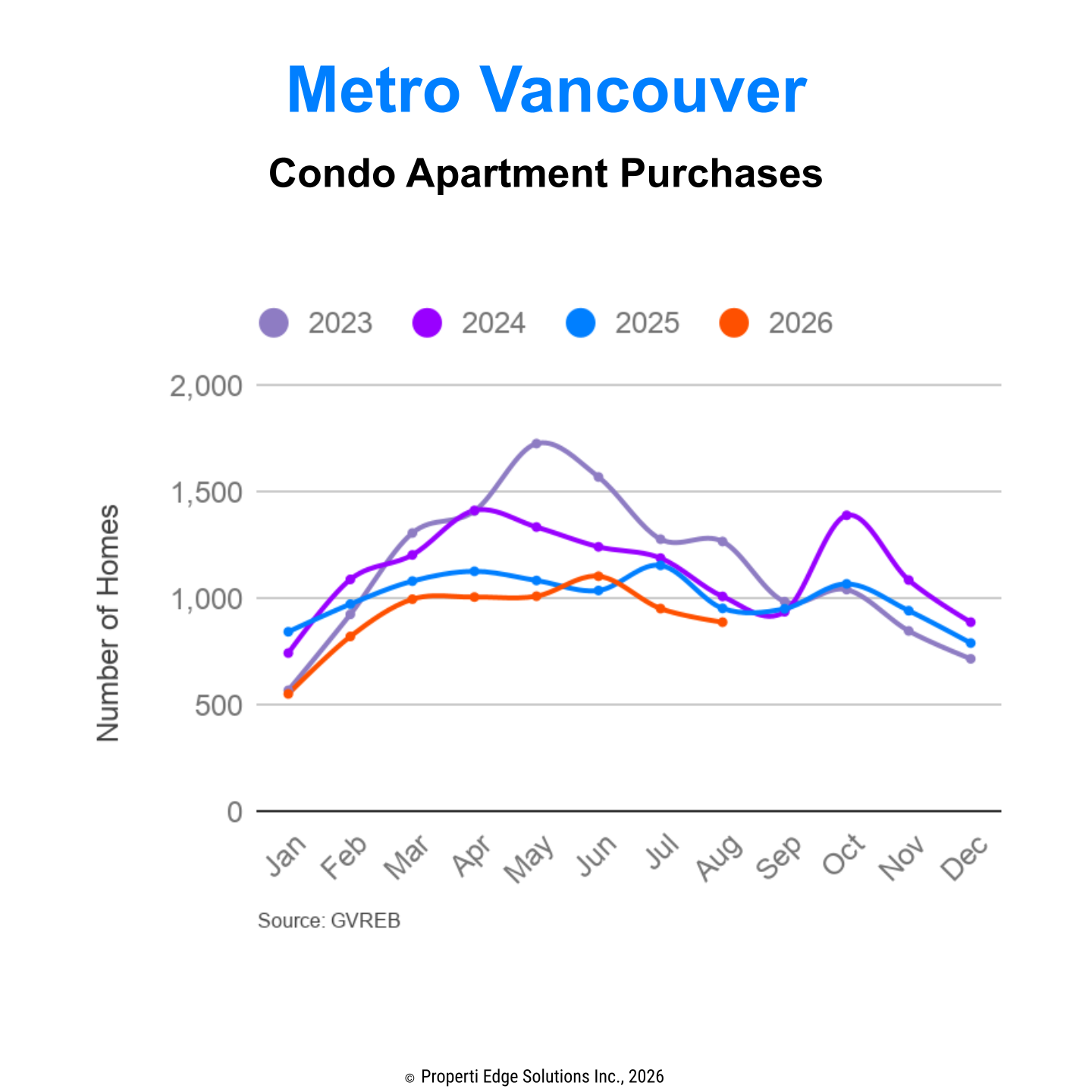
Demand & Supply: Demand for condo apartments dropped by 7% year-over-year, while total active listings decreased by 5%.
Price Movement: The benchmark condo price stands at $686,200, down 2% over the last quarter and 7% compared to last year's benchmark of $734,400.
Metro Vancouver Townhouse Market Conditions
While still categorized as a buyer's market overall, townhouses demonstrate structural resilience due to tighter inventory and surge-driven buyer interest. Months of inventory plunged 21% from 8.4 to 6.6 compared to last year, gradually pushing the segment closer toward neutral territory.
Demand & Supply: Townhouses experienced a massive 33% surge in purchase demand, outstripping a modest 5% gain in active listings.
Price Movement: The benchmark townhouse price is $1,028,800, marking a 2% drop over the past three months and a 5% decrease year-over-year (down from $1,079,600).
Analyzing the Macro Risk Environment
Navigating a changing real estate landscape requires weighing broader structural and economic factors:
Market Depth: Metro Vancouver remains a large property market with a deep, international buyer pool. Even during slower market cycles, well-priced homes find buyers.
Interest Rate Dynamics: Central bank policy rates have stabilized at lower levels following previous easing cycles. Low borrowing rates increase buyer purchasing power, but monetary policy operates with a lag of up to 18 months before its full economic impact takes effect. Central banks remain data-dependent and are unlikely to raise rates again until economic fundamentals justify it.
Sector Risk Breakdown
| Property Type | Market Balance | Valuation & Risk | Construction Pipeline |
|---|---|---|---|
| Detached Houses | Buyer's Market 10.5 Months of Supply | Bubble Risk 20x Median Income | Typical Supply Absorbed Easily |
| Condo Apartments | Buyer's Market 7.3 Months of Supply | Moderately Overvalued 7.6x Median Income | Typical Supply Absorbed Easily |
Detached House Risks
Valuation Disconnect: Detached prices present severe fundamental risk. The benchmark price ($1.799M) stands at roughly 20 times local median household income, far above sustainable levels of 4 to 6 times income.
Supply Absorption: Construction levels remain within typical historical parameters, allowing completed units to enter the market without triggering severe supply shocks.
Condo Apartment Risks
Income-to-Price Stretch: Condos face moderate overvaluation risks, trading at 7.6 times local median household income. While less extreme than single-family homes, prices remain stretched relative to local wages.
Supply Absorption: New completions match typical historical rates, ensuring predictable inventory additions over the near term.
Strategy: Why Autumn Is Good, but January May Be Better
The second half of the year naturally introduces seasonal headwinds into Metro Vancouver real estate. As weather cools and school schedules settle, active buyer participation wanes, causing listings to sit longer and sellers to grow more negotiable.
Buying today allows you to take immediate advantage of 10% to 14% discounts relative to the 2022 peak, without the intense competition typical of spring bidding wars.
However, if you are willing to wait, seasonal weakness often peaks in late December and early January when motivated sellers are most eager to finalize transactions. Entering the market in January 2027 could offer the ideal combination of lower benchmark prices, maximum seller concessions, and low mortgage rates before spring activity resumes.