Canadian mortgage rate forecast 2026 to 2028: The global bond shock
Governments across the rich world are unnerved by surging borrowing costs on government debt, but the true victims of this fiscal indiscipline are Canadian home buyers and homeowners. As global bond markets revolt and geopolitical shocks push energy prices higher, the Bank of Canada is trapped and the era of falling mortgage rates is definitively over.
The macro arithmetic of expensive money
To understand why a semi-detached house in Toronto or Montreal is becoming more expensive to finance, one must look far beyond Canada's borders. Government debt across the developed world has reached staggering heights. The United States federal debt has eclipsed $40 trillion, a persistent deficit that requires a constant flood of new treasury issuance. Meanwhile, corporate titans are issuing tens of billions in debt to fund artificial intelligence infrastructure.
Bond investors, faced with this overwhelming supply, are demanding higher returns. This acts as an inescapable gravitational pull on Canadian borrowing costs.
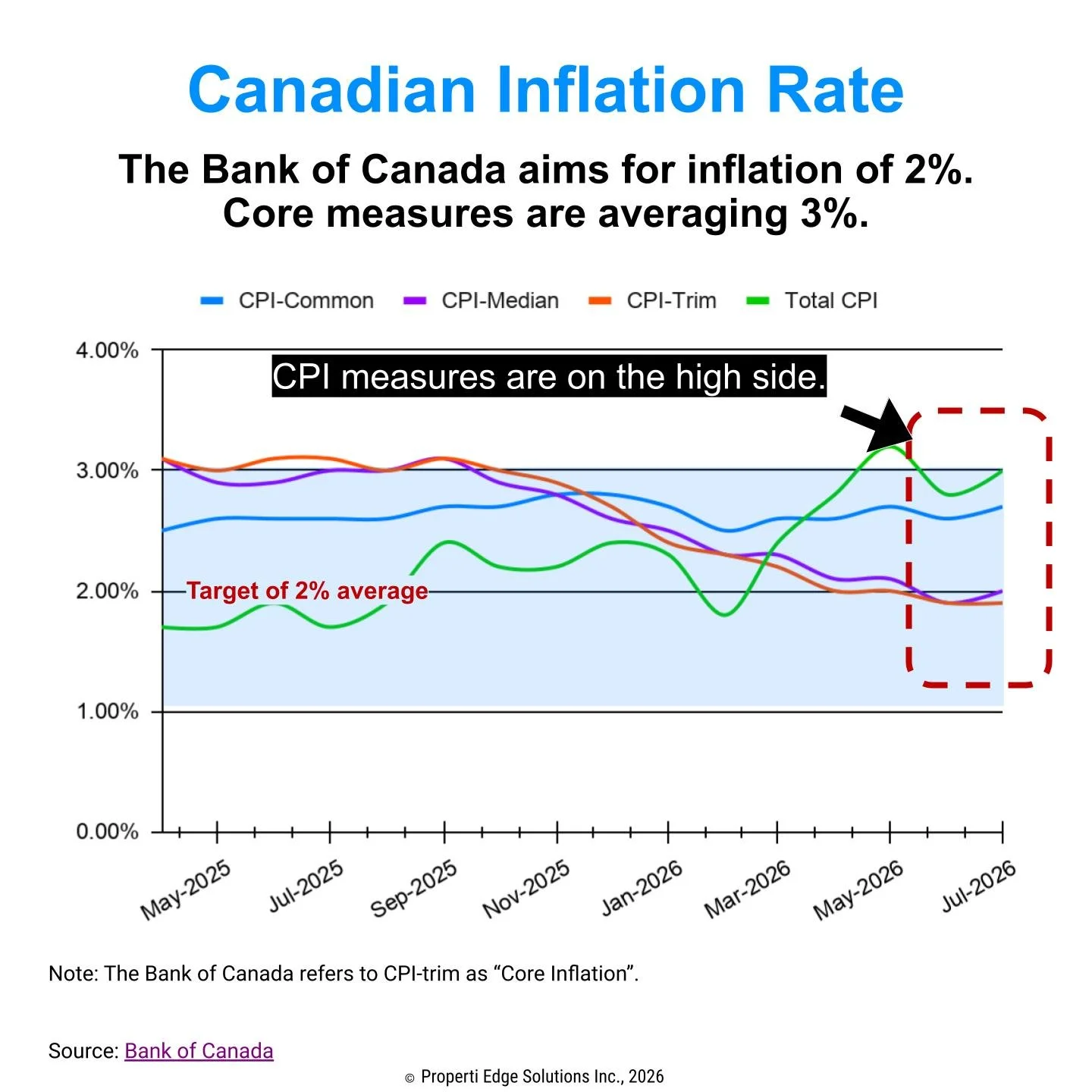
Compounding this structural shift is a fresh geopolitical jolt. Intensified conflict in the Middle East and threats to the Strait of Hormuz have pushed Brent crude back above US$90 a barrel. This acts as a double-edged sword for the Canadian economy: it drags down growth while simultaneously pushing headline inflation back up to 3% as of July 2026.
The central bank's dilemma
The Bank of Canada finds itself in an unenviable position. The brisk monetary easing of 2025, which brought the overnight policy rate down to 2.25%, has run its course. The economy exhibits genuine slack, with unemployment hovering at 6.4% through July. Gross domestic product growth is projected at a anemic 0.7% for the year.
In a vacuum, such economic fragility would demand further rate cuts. But the central bank answers first to its inflation mandate. With energy prices tugging headline inflation upward and the United States forcing annual reviews of the CUSMA trade agreement, the Bank is firmly in a wait-and-see posture. Forecasters at major institutions, including Scotiabank and RBC, now believe the balance of risks has tilted. The next move is highly likely to be a hike, potentially arriving by early 2027.
The five-year anchor
Unlike the 30-year fixed mortgages common south of the border, Canada's housing market is acutely sensitive to the five-year yield. This government bond acts as the pricing floor for fixed-rate mortgages.
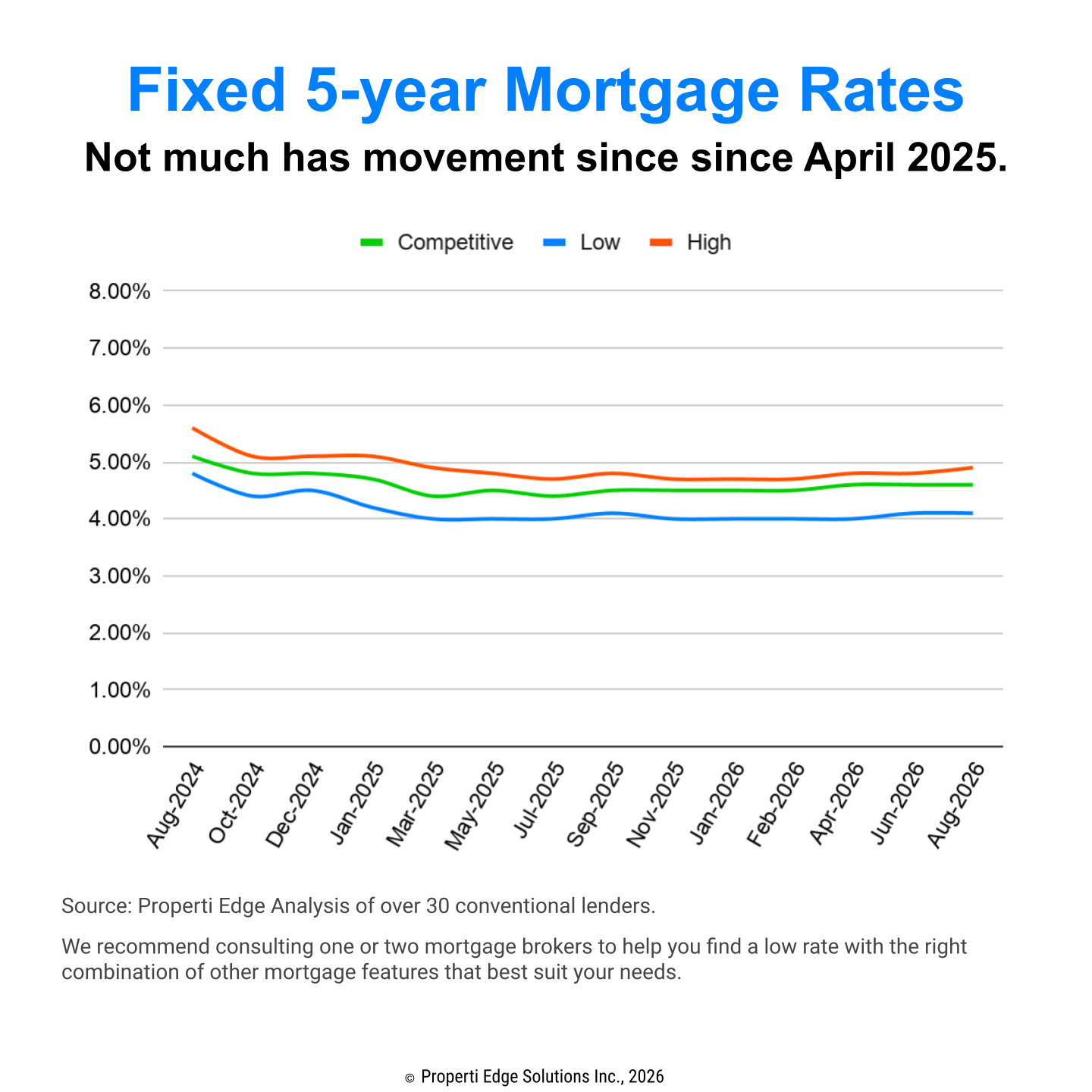
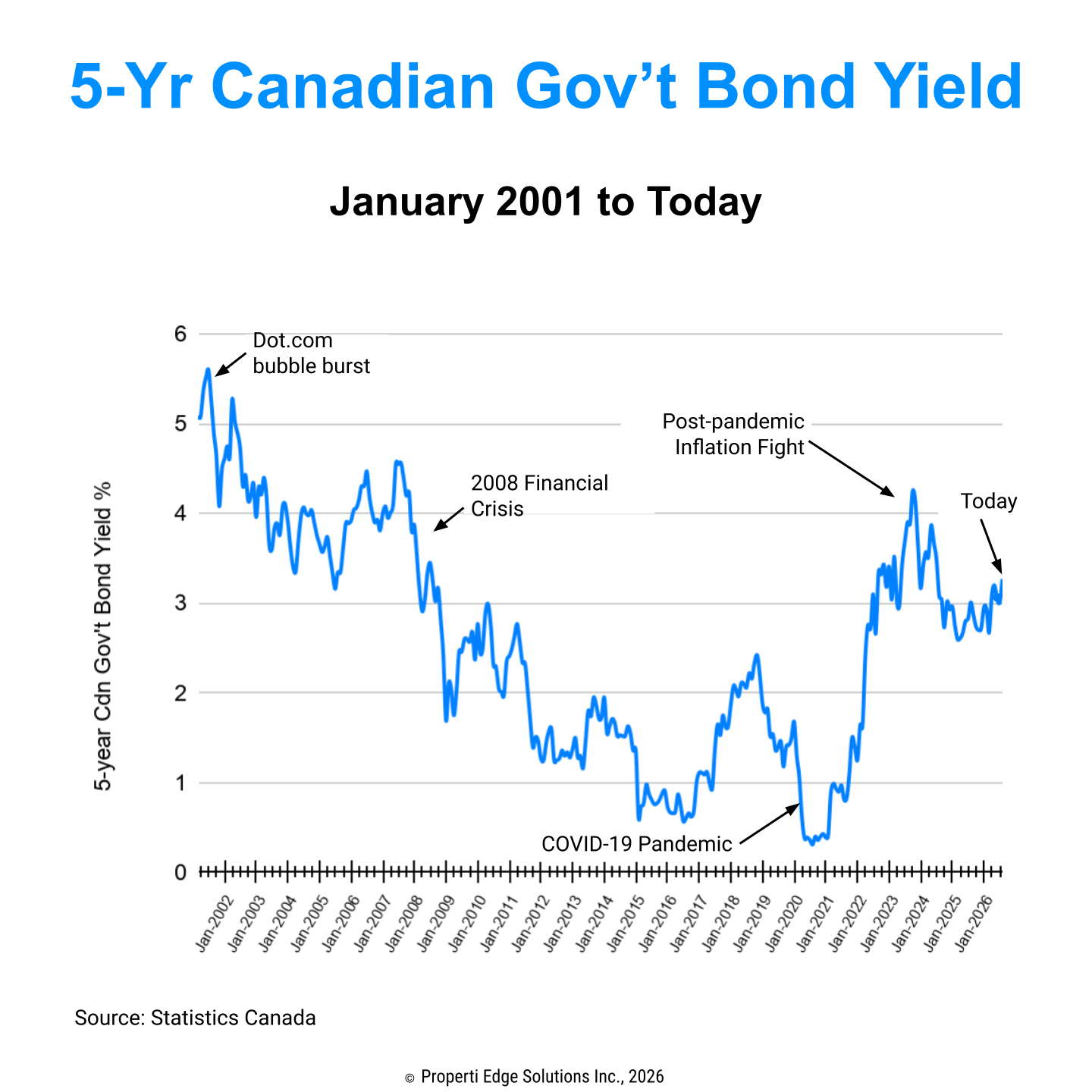
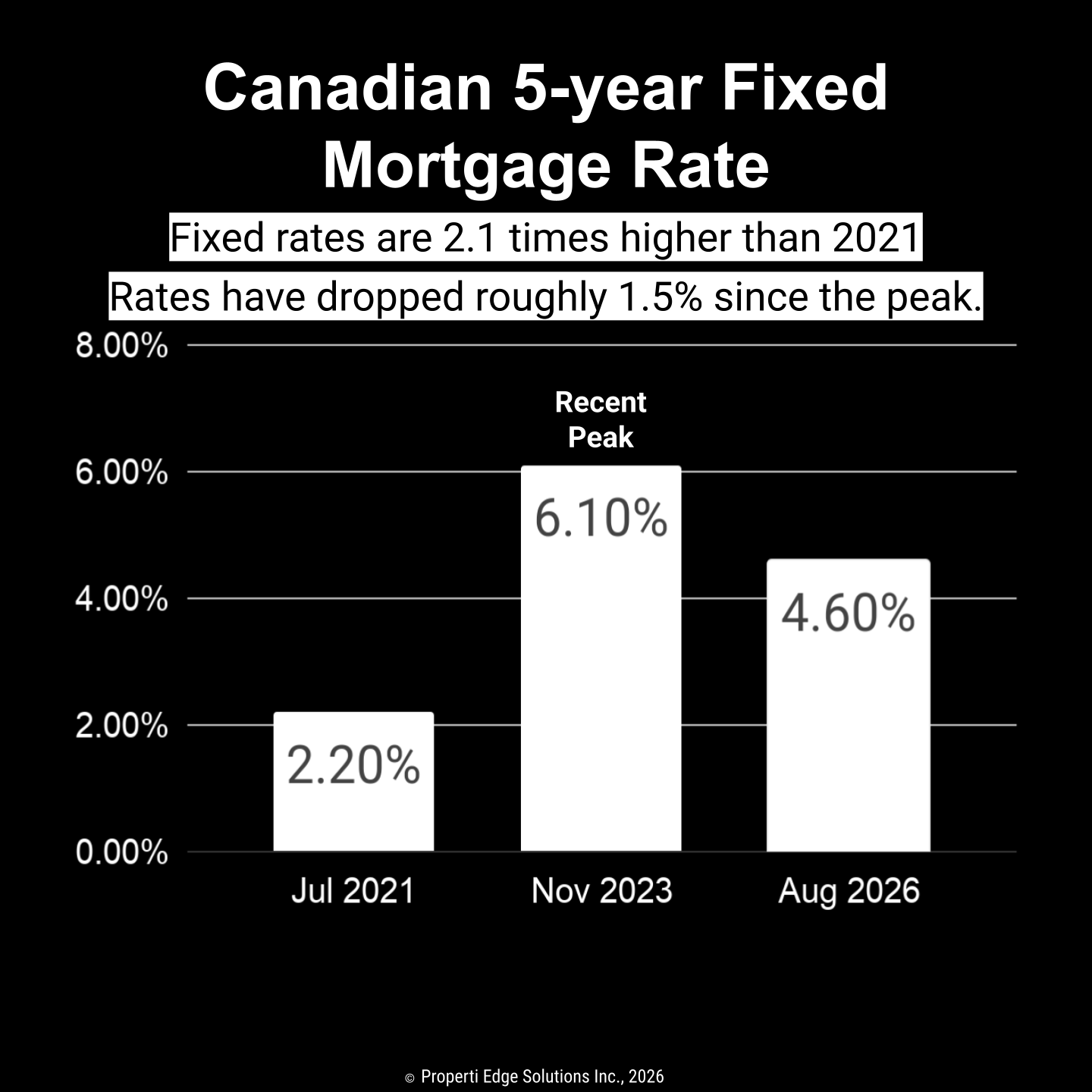
Since the latest flare-up in the Middle East, Canadian five-year yields have climbed by nearly 0.40 percentage points. Lenders have swiftly passed this cost to consumers. The best five-year fixed rates currently hover between 4.0% and 4.6%. If inflation proves stubborn and the Bank of Canada is forced to hike rates repeatedly, fixed mortgage rates are forecast to drift toward 4.9% by the end of 2026 and could breach 5.0% by 2028. Locking in a fixed rate today buys predictability in a profoundly unpredictable world.
The variable vulnerability
Those holding out hope for a return to the rock-bottom variable rates of the early 2020s are engaged in wishful thinking. Variable rates currently sit between 3.6% and 4.5%, representing the absolute floor of the current interest rate cycle. The typical competitive variable rate offer is 4%.
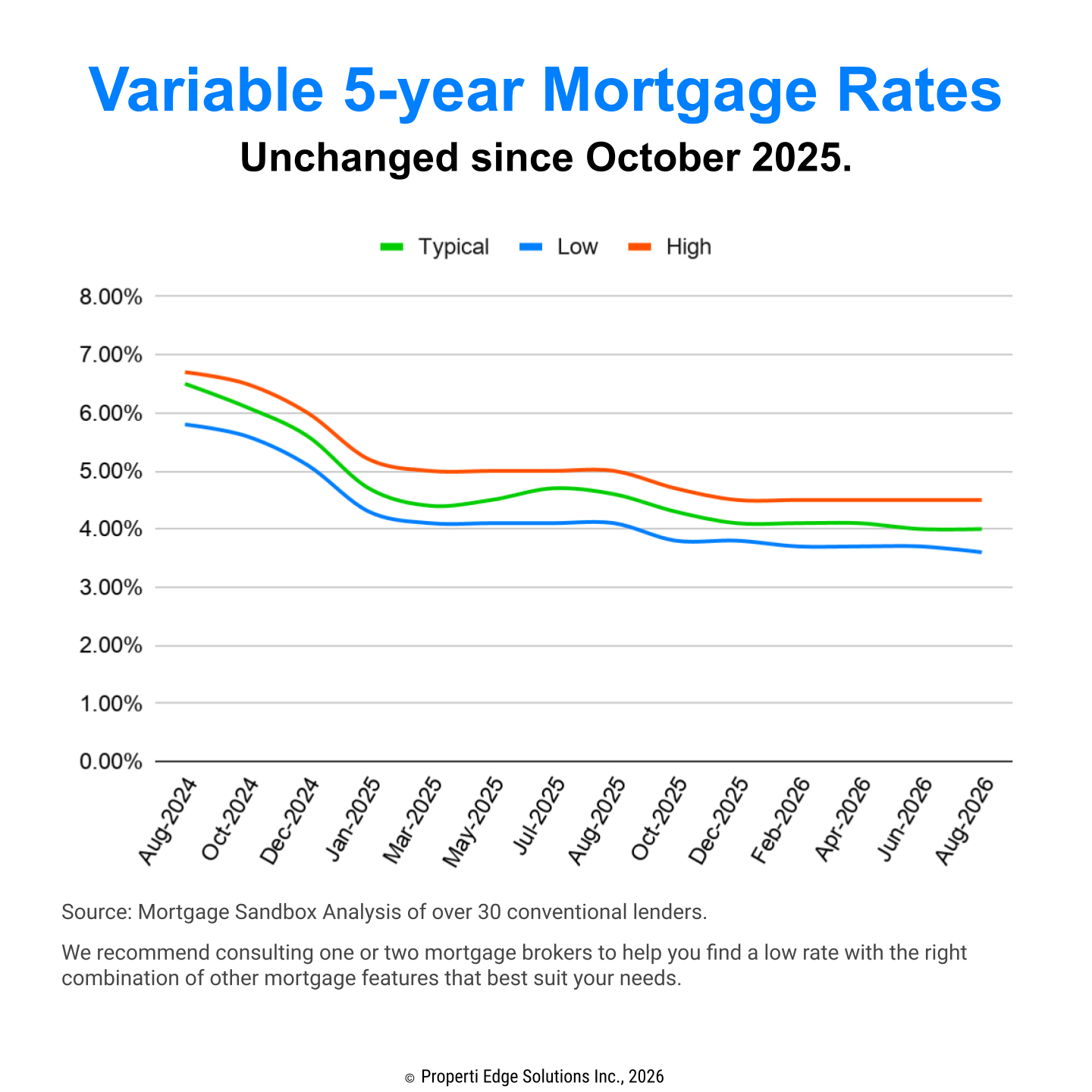
Absent a severe recession, the Bank of Canada will not ease policy further. For borrowers with strong cash flow, a variable rate offers a lower opening cost. However, it exposes the household directly to the spectre of inflation. If the Bank raises its policy rate as projected, variable rates could climb by 1.00 to 1.50 percentage points by the close of 2027. This harsh reality has made the three-year fixed term an increasingly popular compromise, offering medium-term stability while allowing borrowers to renegotiate in 2029 when the global economic picture may be clearer.
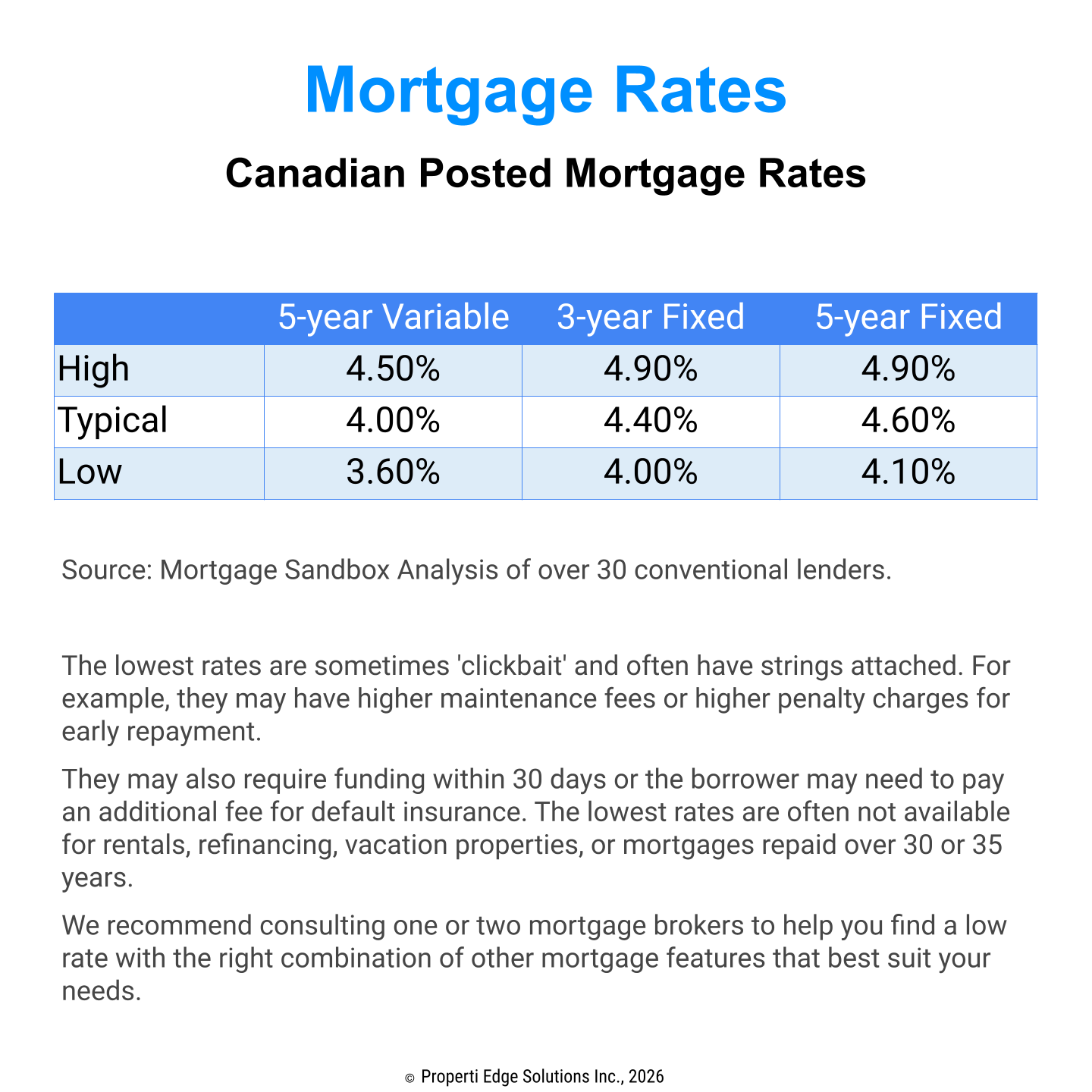
Mortgage Rate Card Aug 21 2026
A harsh reality for housing
The translation of global bond yields to domestic household budgets is unforgiving. A single percentage point increase in a mortgage rate trims a buyer's purchasing power by roughly 10%.
For home buyers entering the market in late 2026, the mathematics require deep caution. Federal stress tests ensure borrowers can avoid bankruptcy, but they do not guarantee a comfortable standard of living. Allocating the maximum allowable income to a mortgage leaves a family dangerously exposed to the rising costs of food, fuel, and municipal taxes. Borrowing to the hilt in the current climate is a reliable recipe for becoming house-rich and life-poor.
For sellers, the message is equally stark. The frenzied bidding wars that defined the post-pandemic years are a historical artifact. In a higher-rate environment, demand is fundamentally constrained by the cost of capital. Properties that are well-presented and fairly priced will continue to change hands, but overpriced listings will simply languish. In a battle between seller expectations and global bond markets, the bond market always wins.