
Housing Market Shudders as Job Losses Mount in Montreal, Vancouver, Toronto
Canada’s labour market took a sharp turn for the worse in February, posting the largest monthly decline in employment since the onset of the pandemic and raising fresh alarms for a housing sector already buckling under the weight of high interest rates and skittish consumers.
Statistics Canada reported Friday that the economy shed 84,000 jobs during the month, double the loss recorded in January, sending the unemployment rate surging 0.2 percentage points to 6.7 per cent. The bloodletting was concentrated in the nation’s most populous provinces, dealing a direct blow to the real estate markets of Toronto, Montreal and Vancouver just as the critical spring selling season gets underway.
The employment rate—the proportion of working-age Canadians with a job—fell for the second consecutive month to 60.6 per cent, underscoring a growing sense of economic anxiety that economists warn could freeze home buying activity for months to come.
When people worry about their next paycheck, they don’t sign on the dotted line for a 25-year mortgage. The wealth effect is now working in reverse.
Montreal leads the employment decline
Quebec bore the brunt of the February carnage, losing 57,000 jobs. That’s a stunning 1.2 per cent drop that marks the province’s most significant employment contraction since January 2022. The Montreal metro area, which accounts for roughly half the province’s economy, saw unemployment claims spike as job losses swept through the services sector, particularly wholesale and retail trade.
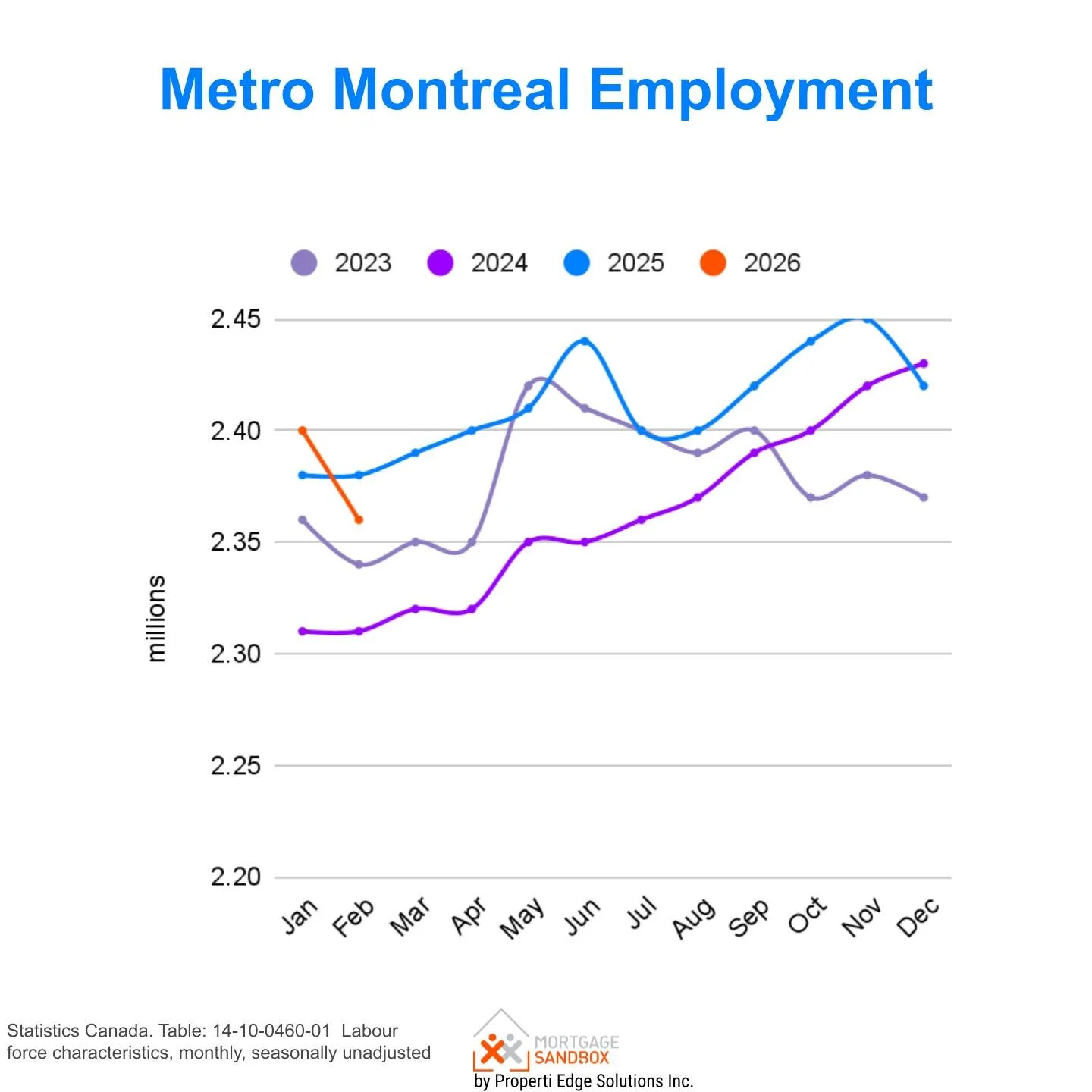
The timing could not be worse for Montreal’s resale market, which had shown tentative signs of stabilization after a brutal 2024-2025 correction. With the provincial unemployment rate now at 5.9 per cent, up sharply from 5.2 per cent in January, many first-time homebuyers are expected to retreat to the sidelines, further suppressing demand in boroughs like Rosemont and Verdun where inventory has been steadily building.
Toronto’s jobless rate hits 7.6%
Ontario’s employment held steady in February, but that headline figure masks a deepening crisis beneath the surface. The number of people actively searching for work in the province surged by 28,000, a 4.3 per cent increase that pushed the provincial unemployment rate up to 7.6 per cent. In the Toronto Census Metropolitan Area, real estate agents report that open houses are drawing fewer visitors as buyers remain paralyzed by uncertainty.
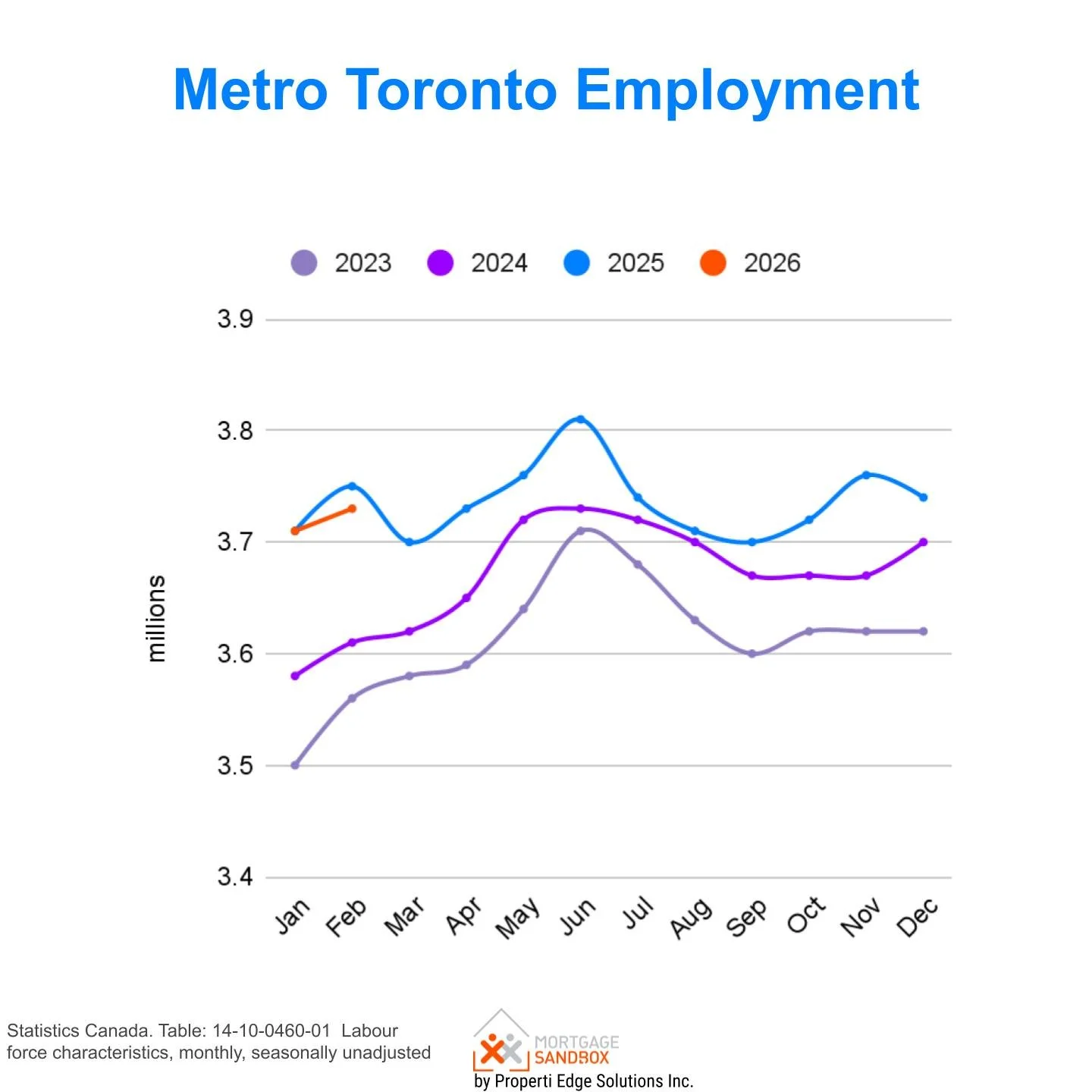
The decline in full-time work nationally, down 108,000 positions in February, is particularly problematic for mortgage qualification. Lenders have tightened underwriting standards in recent months, and a prospective buyer moving from full-time to precarious part-time hours may find their borrowing power severely diminished.
Vancouver feels the jobs market chill
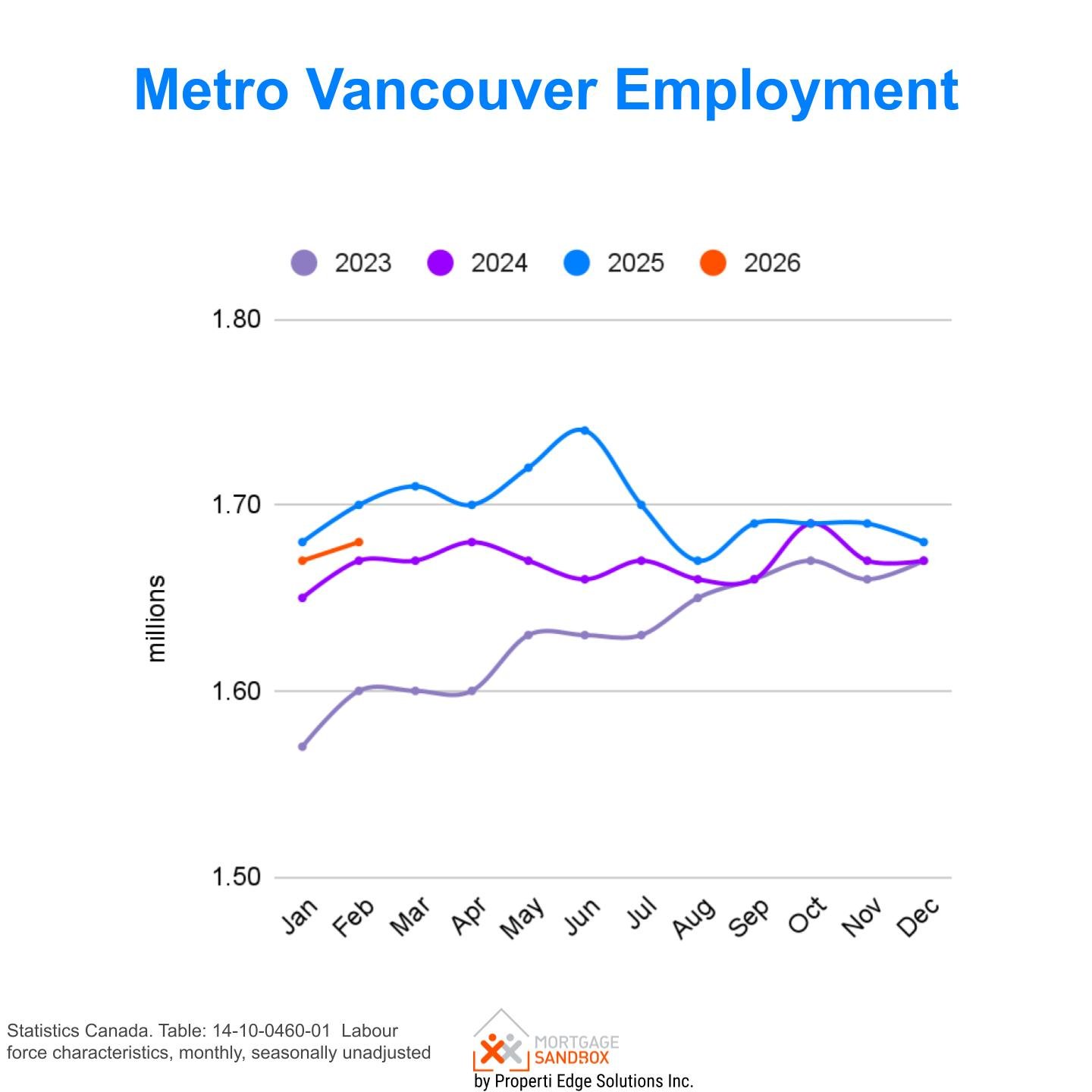
British Columbia lost 20,000 jobs in February, a 0.7 per cent decline that adds downward pressure on Vancouver’s already cooling housing market. While the province’s unemployment rate held at 6.1 per cent, the composition of losses, concentrated in goods-producing sectors and among younger workers, signals trouble for entry-level demand in the region’s notoriously expensive condominium market.
Wage growth offers cold comfort
Average hourly wages rose 3.9 per cent year-over-year to $37.56, a modest acceleration from January’s 3.3 per cent gain. But economists caution that for those who remain employed, the increase is largely being eaten up by higher borrowing costs and sticky inflation in shelter and food.
For those who have lost their jobs—particularly the 47,000 youth aged 15 to 24 who were pushed out of the labour force last month—the wage data is irrelevant.
Consumer sentiment at risk
The cumulative effect of two consecutive months of job losses is beginning to show up in confidence metrics. The Conference Board of Canada’s index of consumer sentiment has fallen for three straight months, and retail spending is expected to soften as households rebuild precautionary savings.

With the Bank of Canada widely expected to hold its policy rate steady at next week’s announcement, there is little immediate relief in sight for major urban centres already caught in the downdraft of a weakening labour market.