
Metro Toronto Housing Market Report: April 2026
The Metro Toronto housing market entered the second quarter of 2026 as balanced, with divergent trends across property types. While the detached and condo segments are beginning to trend in favour of sellers due to tightening inventory, the townhouse market is shifting toward buyers. This period of transition is occurring against a backdrop of falling interest rates and significant demographic shifts, as the region grapples with negative population growth and a softening labour market.
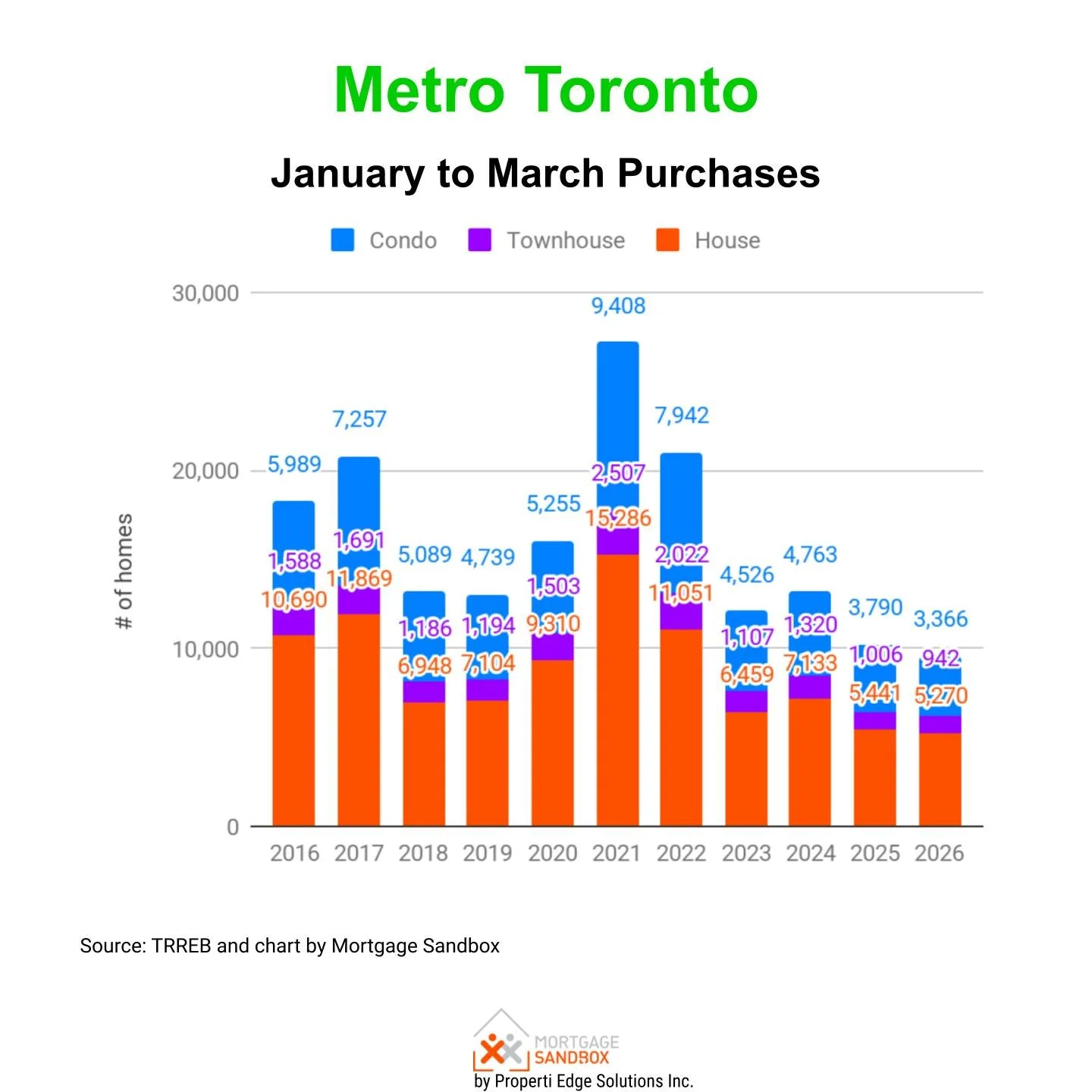
As of 2026, year-to-date buyer activity is the lowest in over a decade. The current market cannot be characterized as a “hot market.”
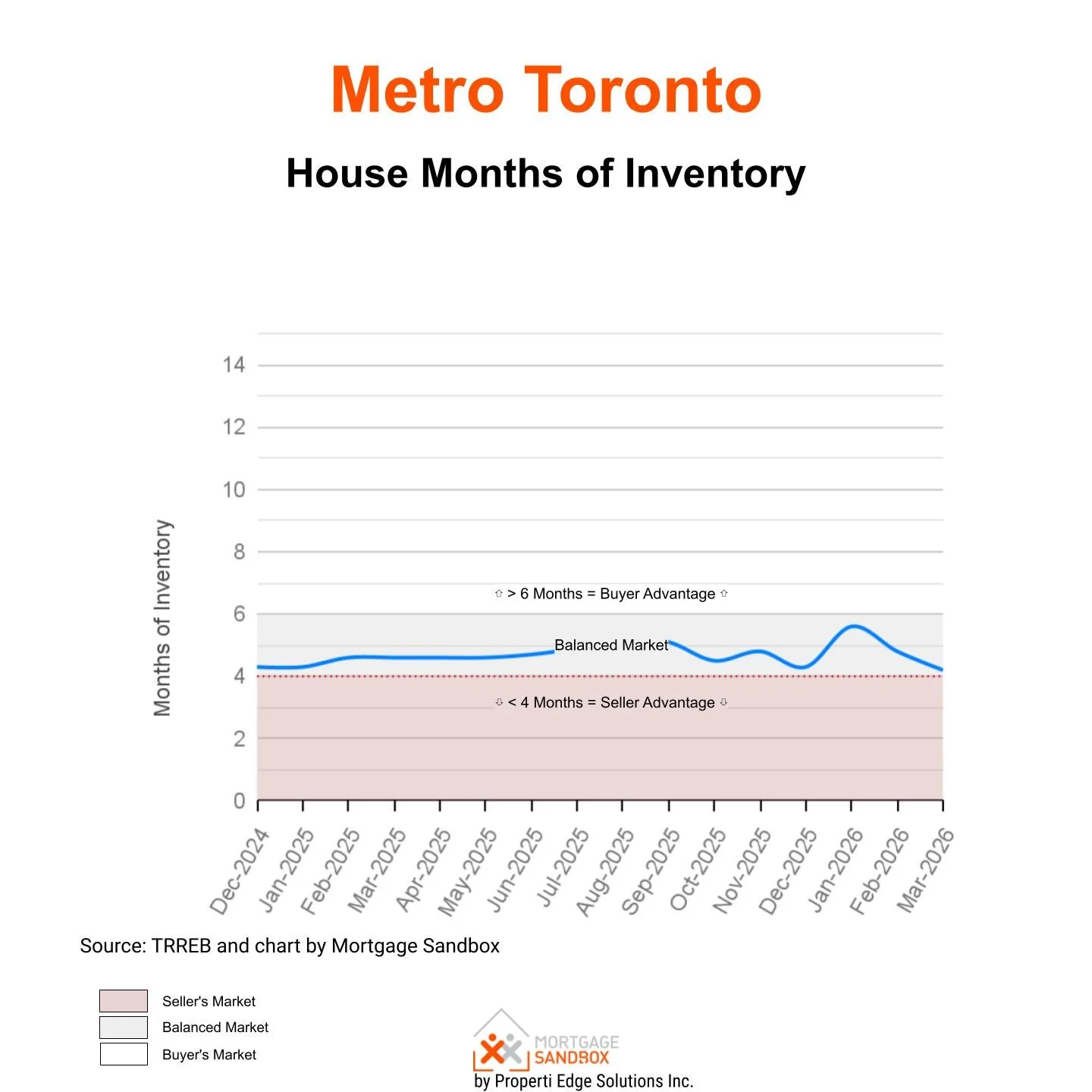
Metro Toronto Detached House Market Conditions
The detached house segment in Metro Toronto is currently experiencing a balanced market that is shifting in favour of sellers. While buyers and sellers have equal negotiating power at present, inventory levels have decreased, putting buyers at a slight relative disadvantage. The months of inventory have fallen from 4.6 to 4.2 compared to the previous year, representing a decline of 9 percent. This change is supported by a 4 percent increase in purchase demand and a 5 percent drop in the supply of active listings.
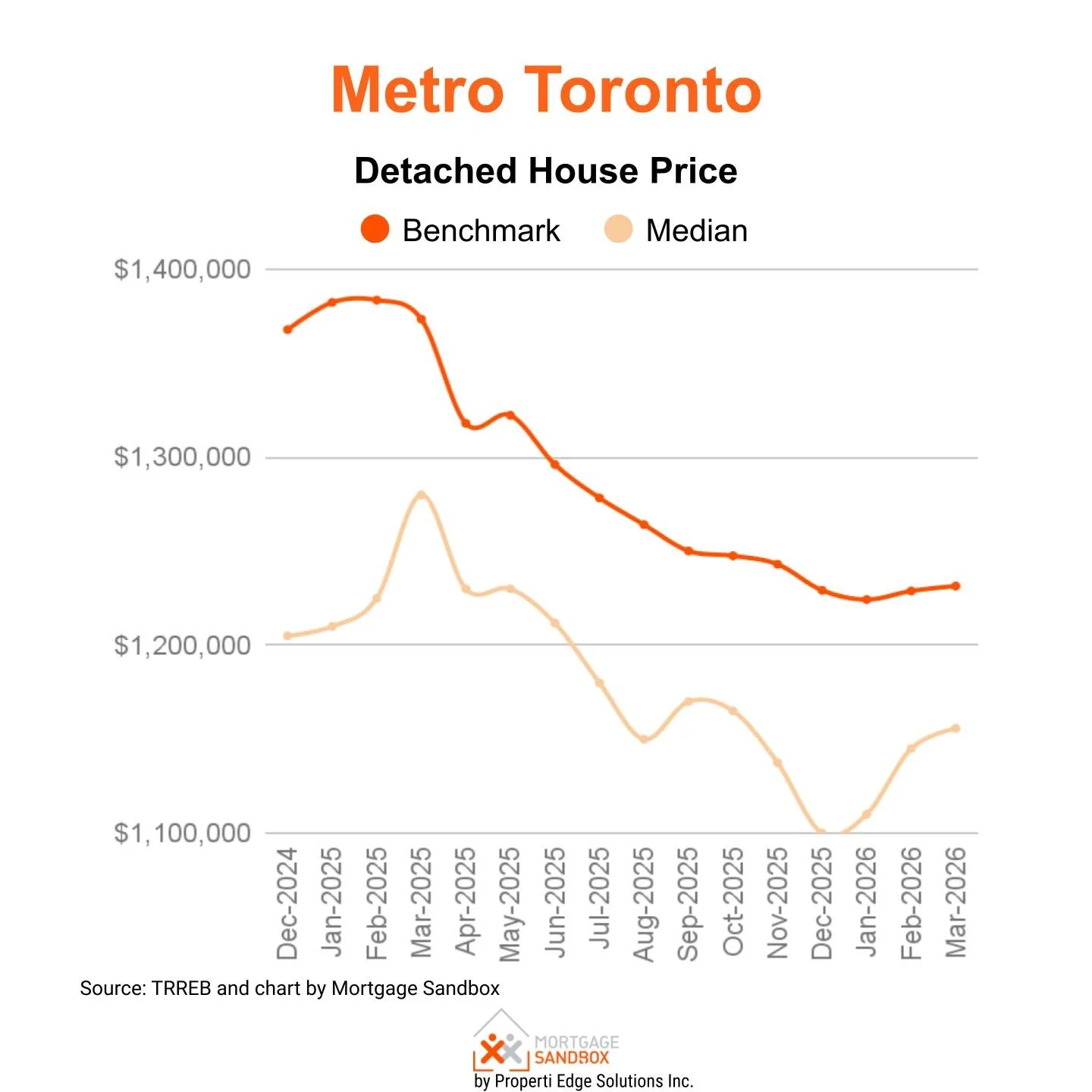
The benchmark price for a detached house is $1,231,500 and has remained flat over the past three months. During this same period, the median detached house price reached $1,155,733, representing a 5 percent increase in favour of sellers. Despite this recent quarterly growth, the benchmark price remains 10 percent lower than the $1,373,600 recorded one year ago.
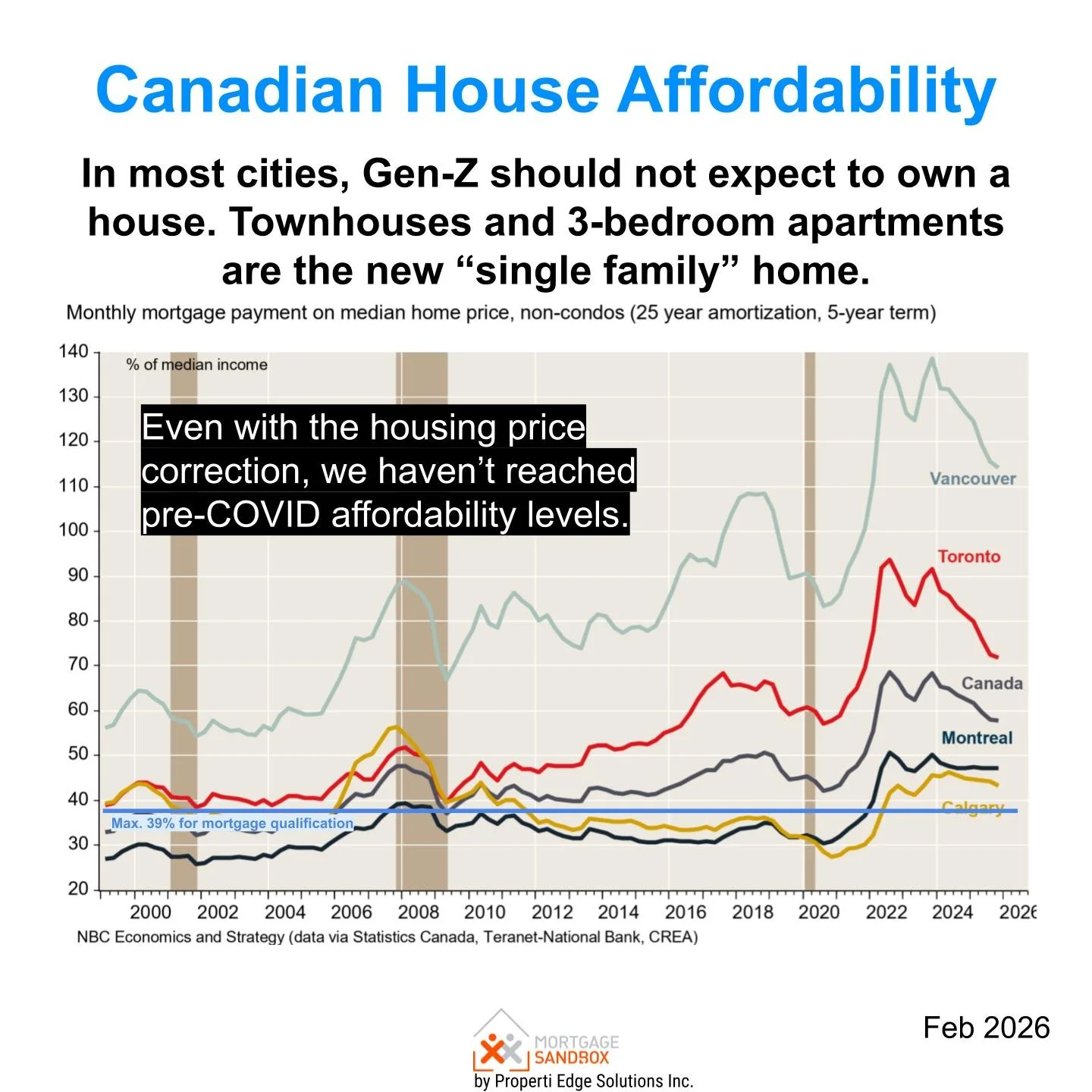
Market analysts note that prices remain disconnected from local incomes, as the benchmark price is 12.7 times the local median household income. This is significantly higher than the sustainable range of four to six times income, indicating a bubble risk.
New housing supply is trending slightly below typical construction levels, suggesting the market can likely absorb completed units without a significant impact on prices.
Metro Toronto Condo Apartment Market Conditions
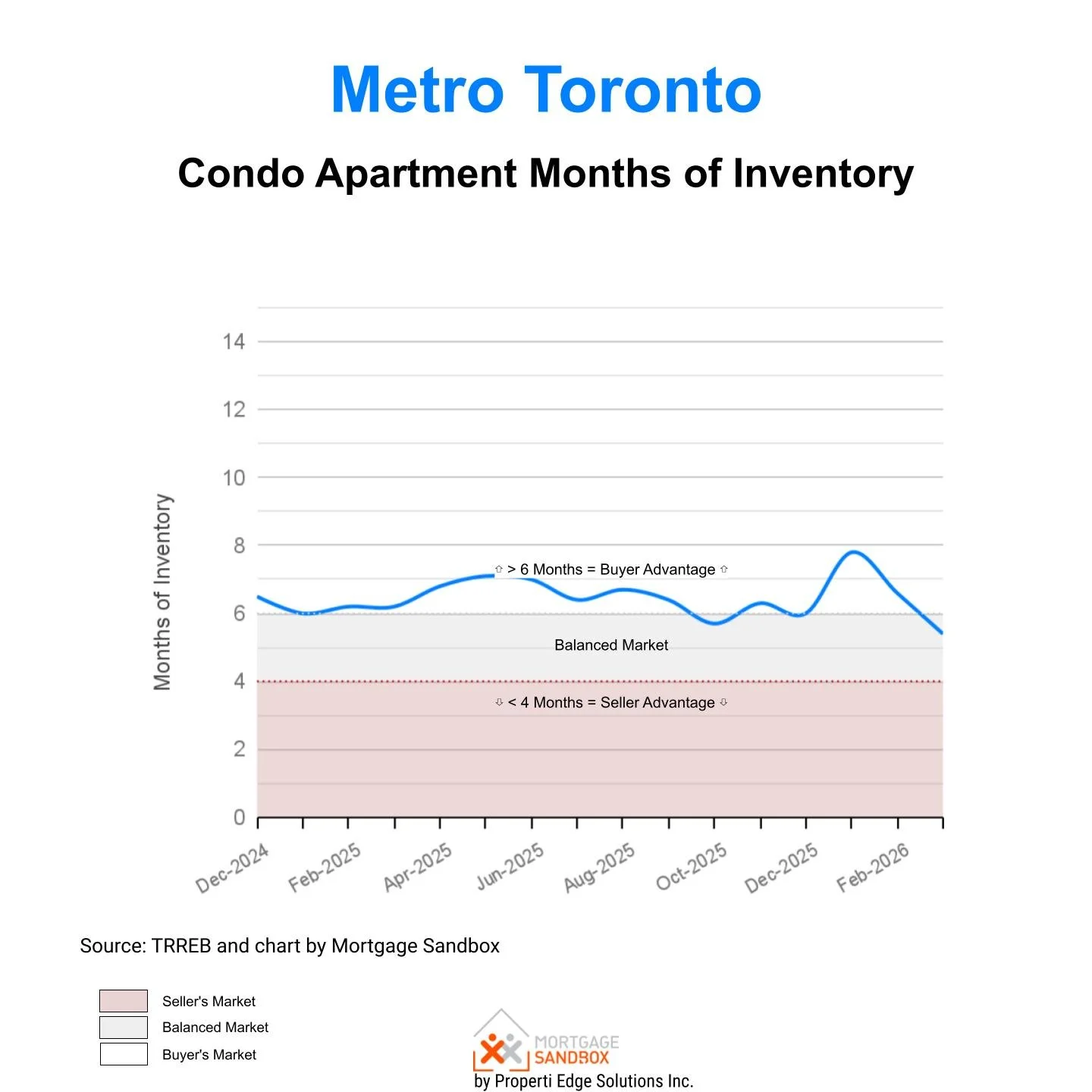
The condo apartment market is also classified as a balanced market that is trending in favour of sellers. Buyers and sellers maintain equal negotiating power for the time being, but a drop in inventory is creating a disadvantage for buyers. Months of inventory fell from 6.2 to 5.4, a 13 percent decrease from last year. This tightening is largely due to an 11 percent drop in active listings, even though purchase demand increased only modestly by 1 percent.
The market is usually tighter in late winter and early spring; however, it could shift back to a buyer's market between April and July.
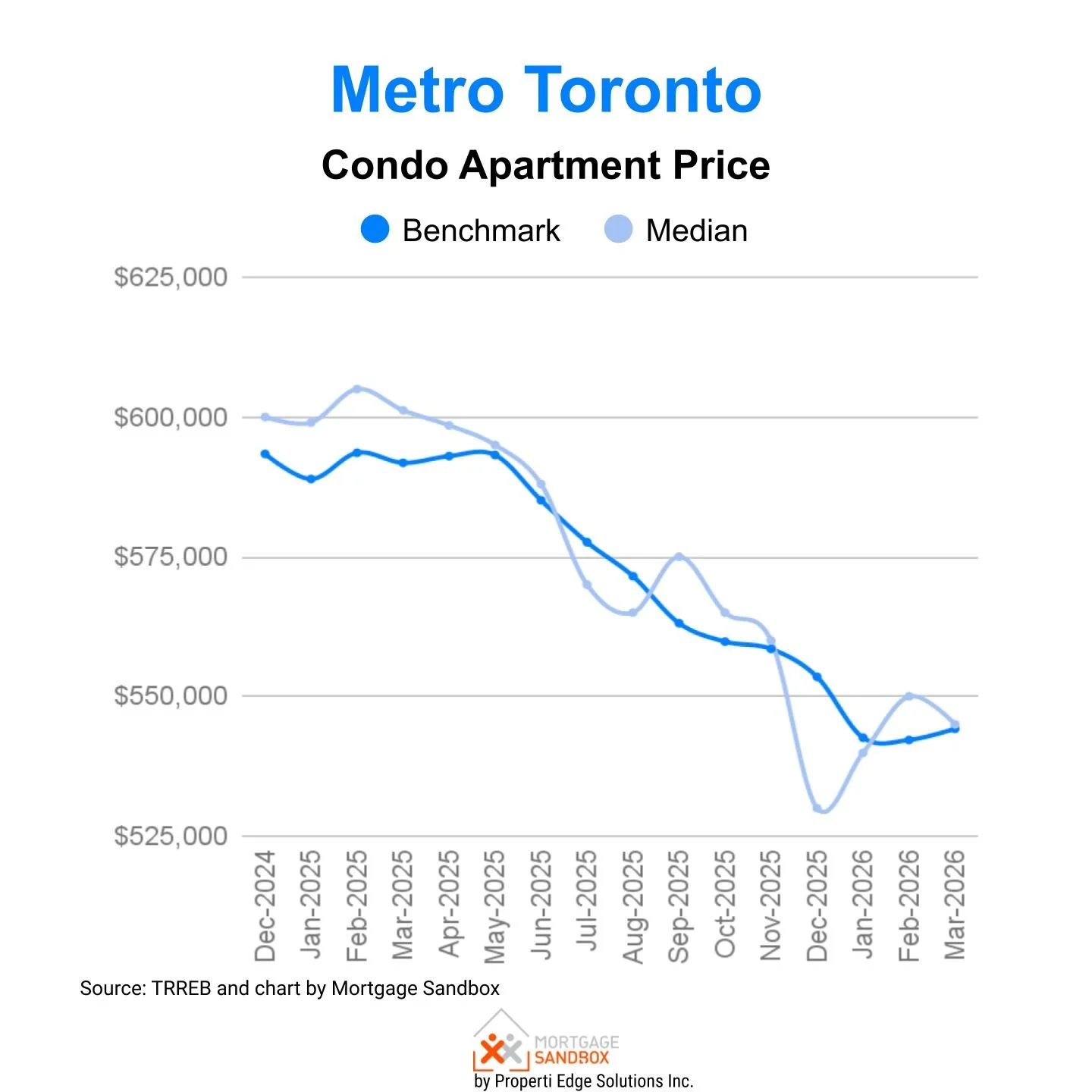
The benchmark price for a condo apartment is $544,200, which reflects a 2 percent decrease in favour of buyers over the past three months. Conversely, the median condo price is $545,000 and has increased 3 percent in favour of sellers over the last quarter. When viewed on a year-over-year basis, the benchmark price has dropped 8 percent from its previous value of $591,800.
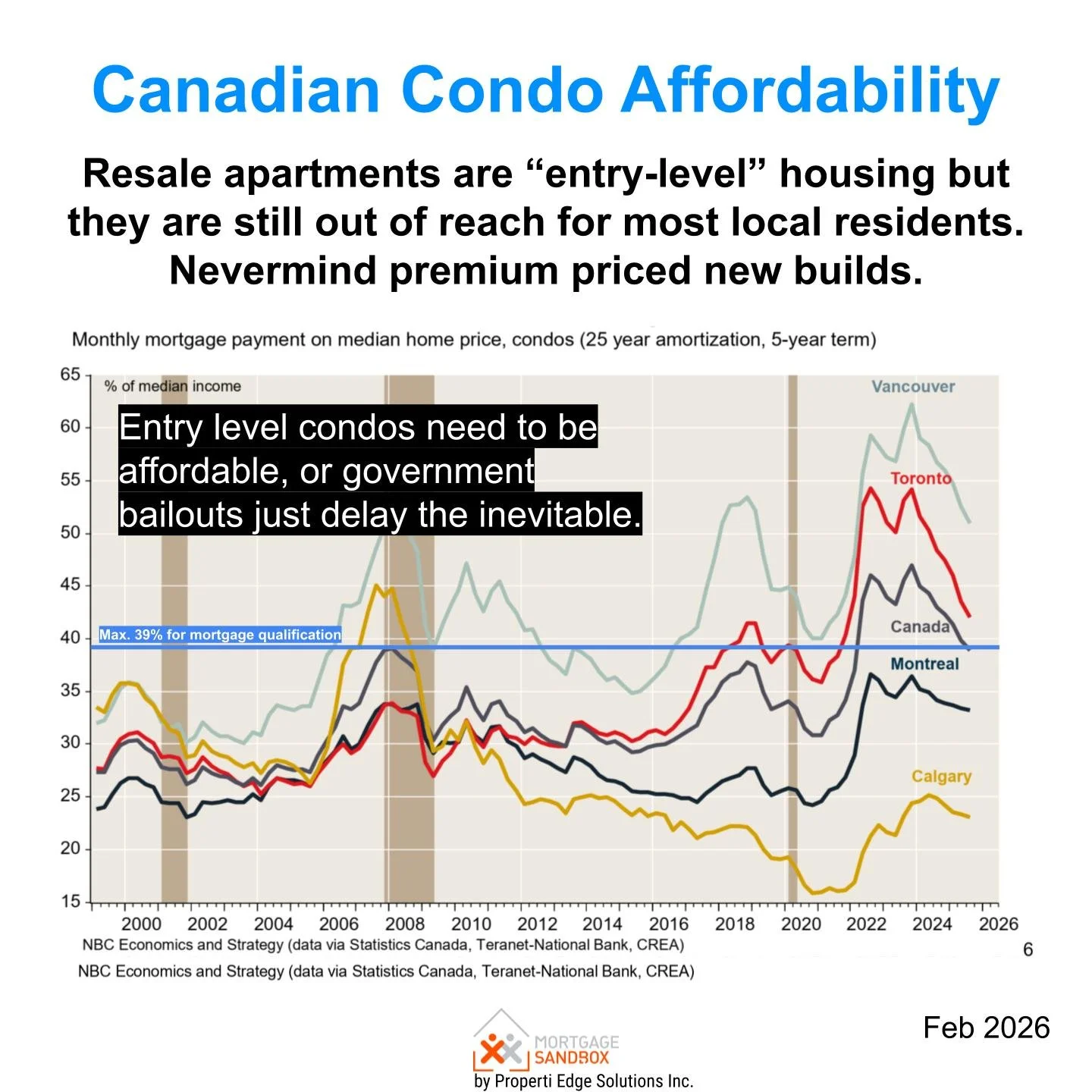
Unlike detached homes, condos are more affordable for most people. The benchmark price is 5.6 times the local median household income, which falls within the sustainable threshold of 4 to 6 times income.
According to Altus Group, there are 14,291 unsold new condo units remaining.In 2024, only 4,720 new condos were sold, and in 2025, there were 2,067 presale or new condo purchases. The outlook for 2026 appears to be slower. Although the HST rebate may alleviate pricing pressures on developers, most buyers are not considering the HST when making their purchase decisions. Many individuals discover the HST only after submitting an offer. As well, social media is buzzing about how developers have used HST rebate to raise their asking prices.
So the HST rebate might serve to bail out developers rather than to help make housing more affordable for buyers.
Metro Toronto Townhouse Market Conditions
The townhouse market remains a balanced market, yet it is currently trending in favour of buyers. Negotiating power is equal between parties, but inventory levels have improved in a way that benefits buyers. Months of inventory increased by 7 percent, rising from 4.5 to 4.8 compared to the previous year. This trend is driven by a 6 percent drop in purchase demand while the supply of active listings remained unchanged.
The benchmark townhouse price is $688,300 and has remained flat over the past three months. The median townhouse price is $696,000, which is a 2 percent increase in favour of sellers over the last quarter. Looking at the annual trend, the benchmark price has dropped 14 percent from the $799,800 reported one year ago. This represents a significant correction in favour of buyers over the last twelve months.
Macroeconomic Risks and Market Outlook
The Metro Toronto property market is influenced by several broader economic factors. In a large market with a deep pool of buyers, sellers are generally able to find buyers even when the market slows. However, when it's a buyer's market, sellers should expect a challenging negotiation.
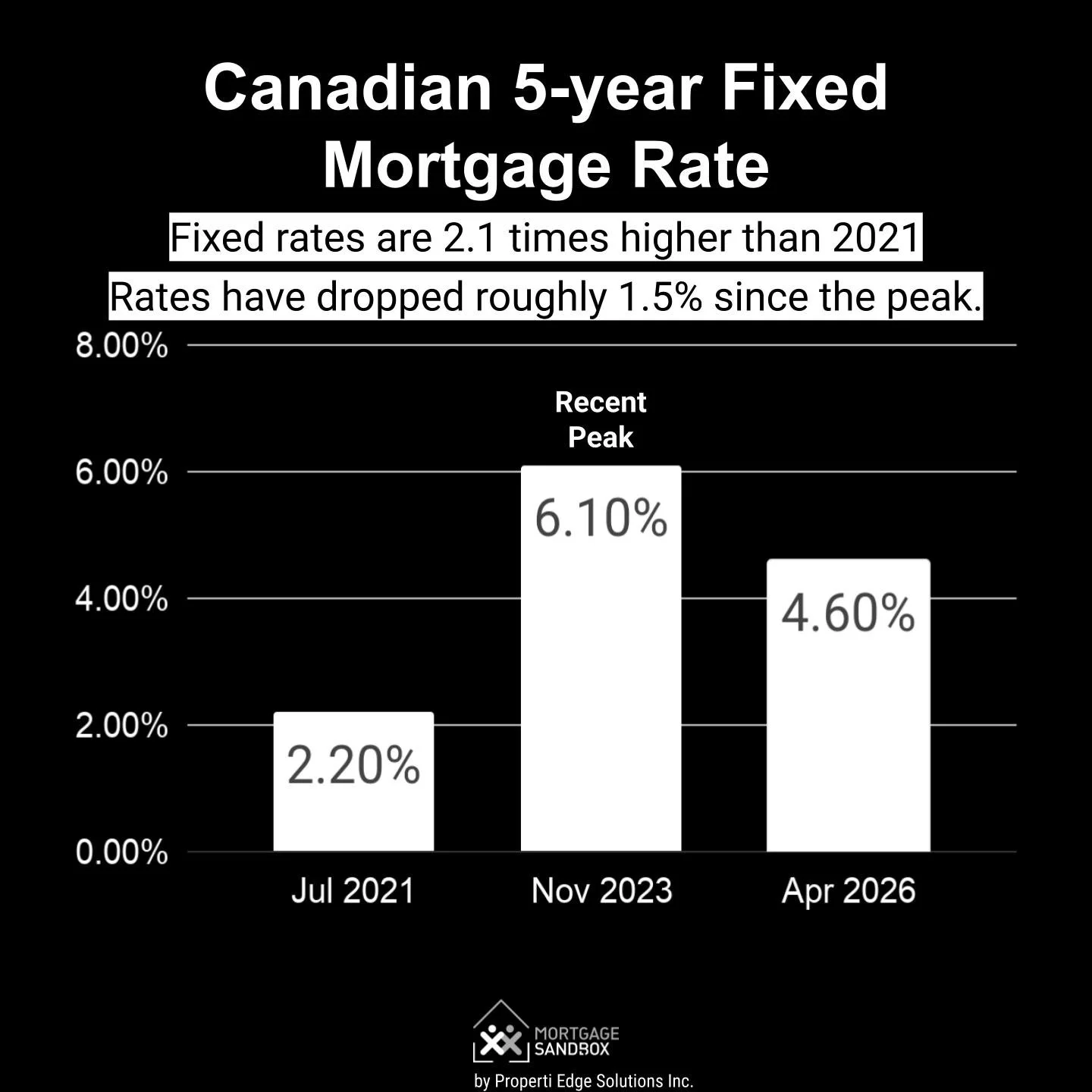
We are currently in the easing phase of the interest rate cycle, and falling rates have increased buying budgets. However, it can take up to 18 months for the full impact of these rate cuts to be felt. Additionally, conflict in the Middle East has caused rates to rise by approximately a quarter of a percent. If the war in Iran ends quickly, this increase in rates may be a minor concern. However, if the conflict continues for an extended period and a spike in oil prices drives inflation, rates could rise significantly, which would further hinder a recovery in the property market.
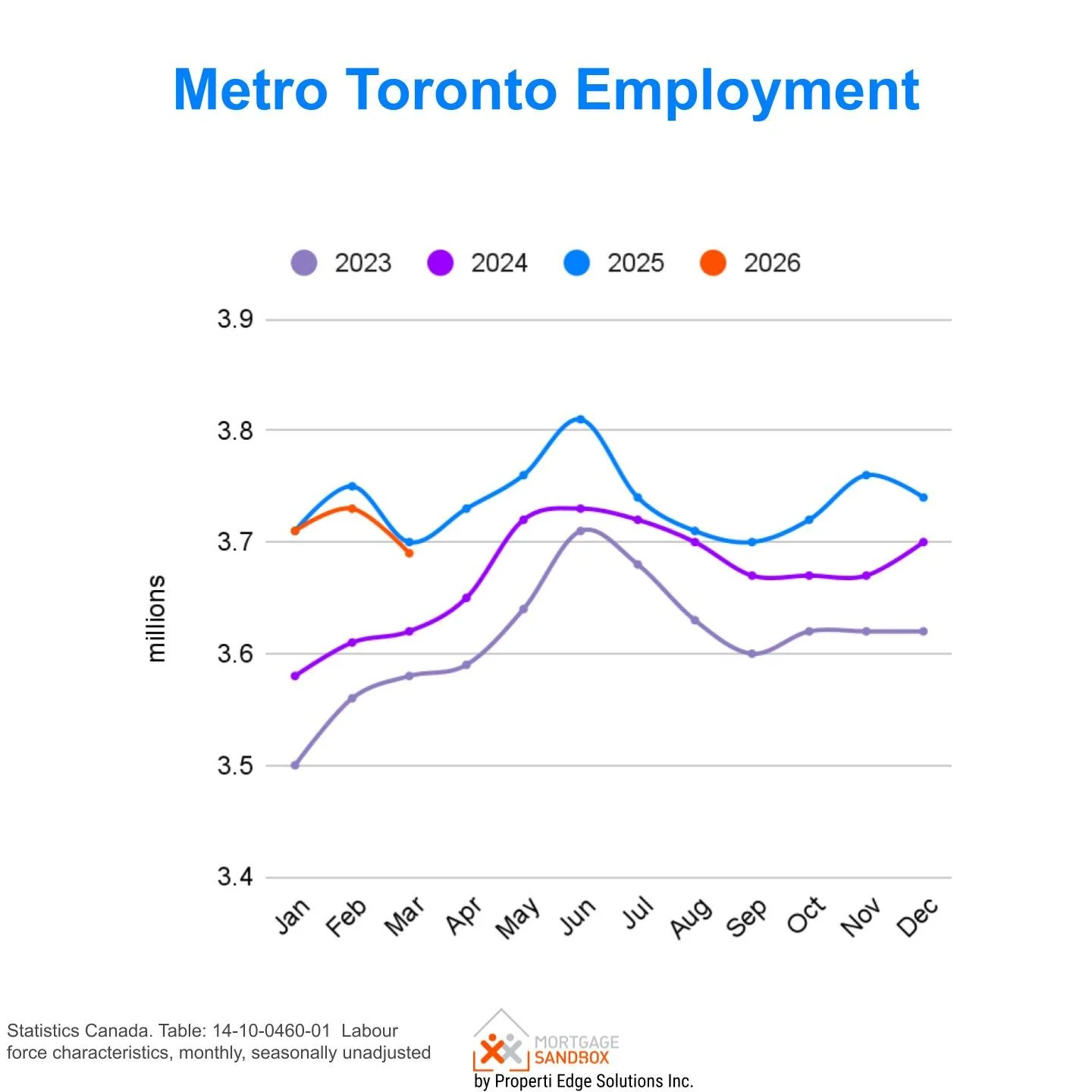
Local economic headwinds include a year-over-year decline in employment of approximately 5,400 jobs year-over-year.
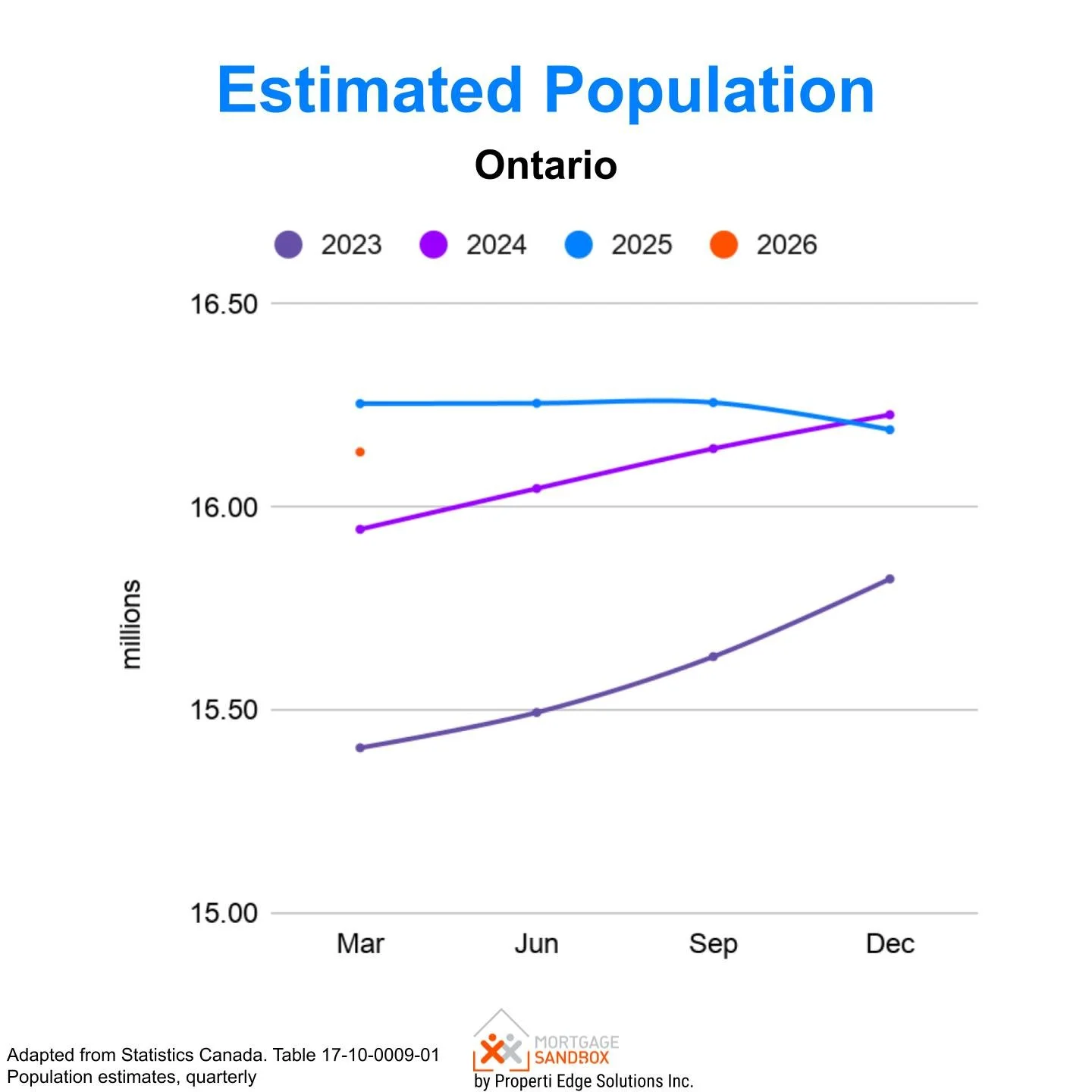
Additionally, negative population growth of 120,000 people in Ontario is easing pressure on the rental market. Rent rates for a 1-bedroom apartment in Toronto are down 16.5% from their September 2023 peak.
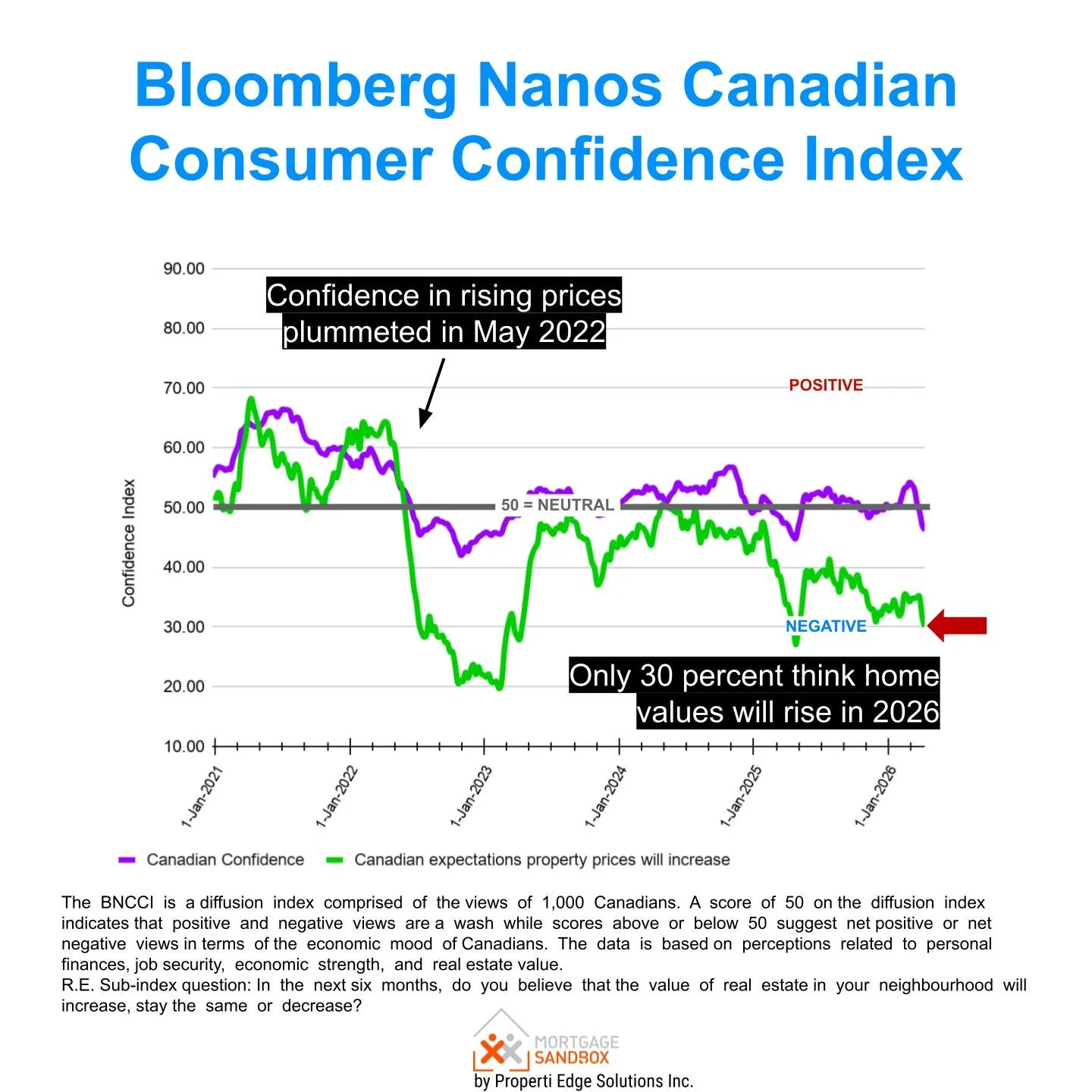
Consumer sentiment has shifted significantly, with only 30 percent of Canadians now believing property prices will be higher in 12 months. This is a sharp contrast to April 2021, when the market was peaking, and 68 percent of the population expected prices to rise. Consumer sentiment is a strong indicator of the current market rather than a predictor of conditions six months in advance.
Forecasts for the region are currently divided.
A TD Bank forecast from March 26, 2026, predicts that Ontario prices will fall by 4 percent in 2026 and show no growth in 2027.
In contrast, a CREA forecast from January 15, 2026, suggested prices would rise by 1 percent in 2026 and 1.5 percent in 2027.
It should be noted that the CREA forecast was issued before the recent Middle East conflicts and the subsequent upward pressure on mortgage rates.